The Unlabeled Human
Was the world made, or did it surge up by itself from the depths of silence?For centuries, everyone who has passed by has pinned a label on the human’s forehead.
One called him a political animal,
another a slave born to suffer,
and another a living robot.
Every time they saw us as “what they needed,” never as ourselves.The root of all these bondages was one ancient belief:
that we are made by another,
so our will and identity must stay in his service.But what if the universe was not created, and came about on its own?
Isn’t it time to see ourselves,
without any glue or label?
1
Nothing
Does “Nothing” really exist?
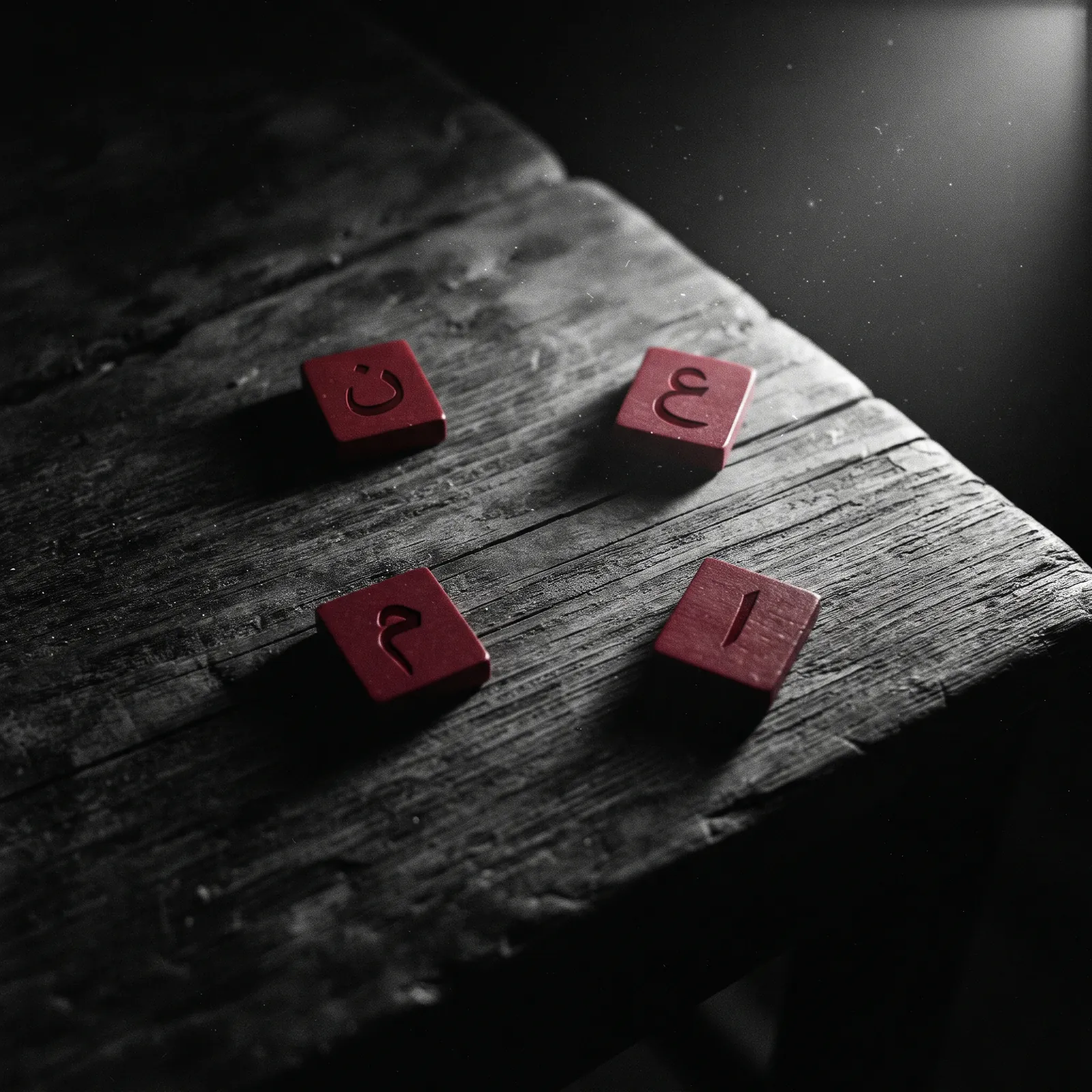
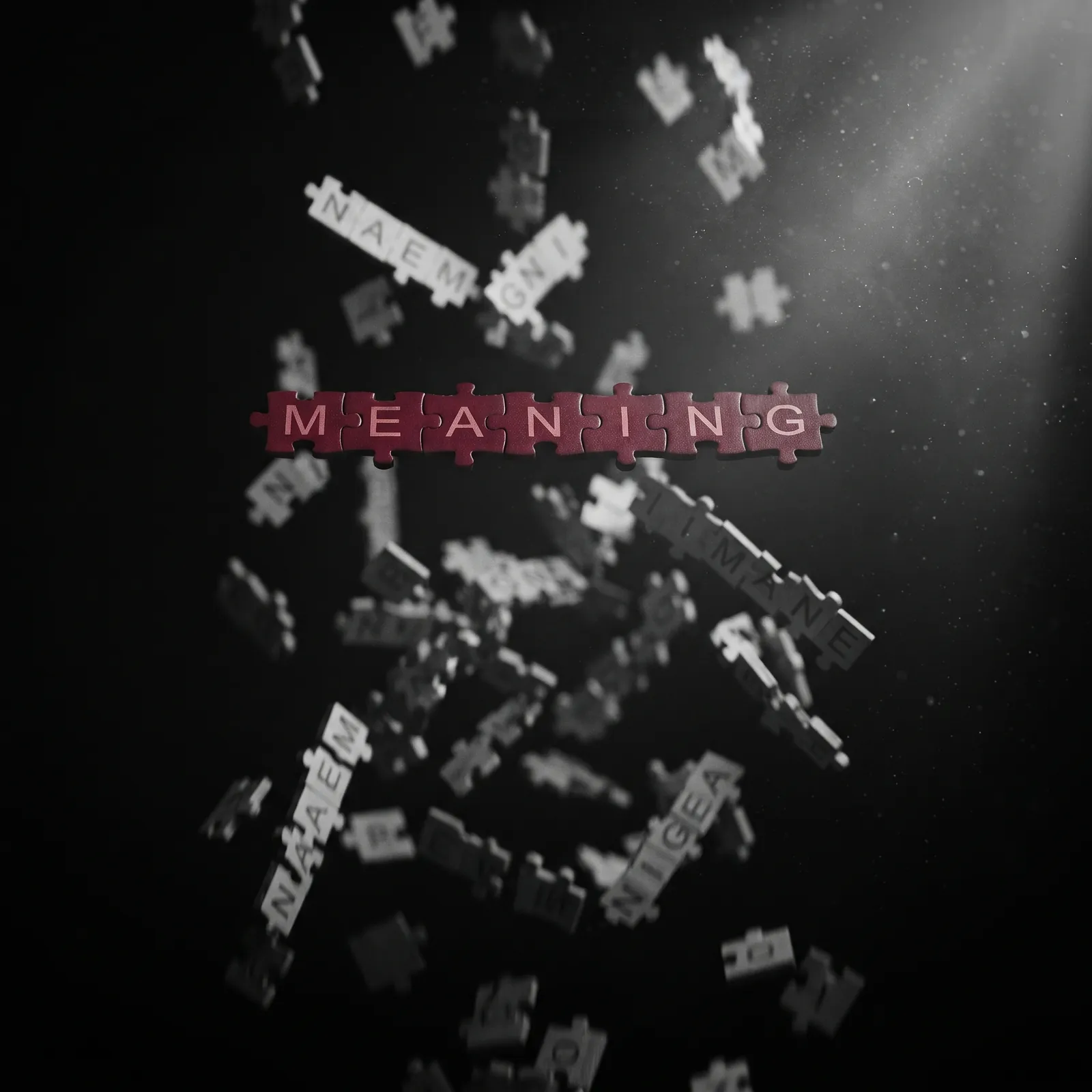
Four letters, the Persian «ن», «ع», «م» and «ا», are tipped onto a table. They form no sentence, no sound reaches the ear, and no purpose is at work. Do they have a meaning? No, they have no meaning at all.
But are they “nothing,” mere emptiness? Again, no. Each one is a capacity that can become meaning; they simply have not yet settled in the right place beside each other. This is the first step of knowing:
What has no meaning yet is not non-being; it is the raw, untouched material of existence.
2
Order
Where does the universe’s Order come from?
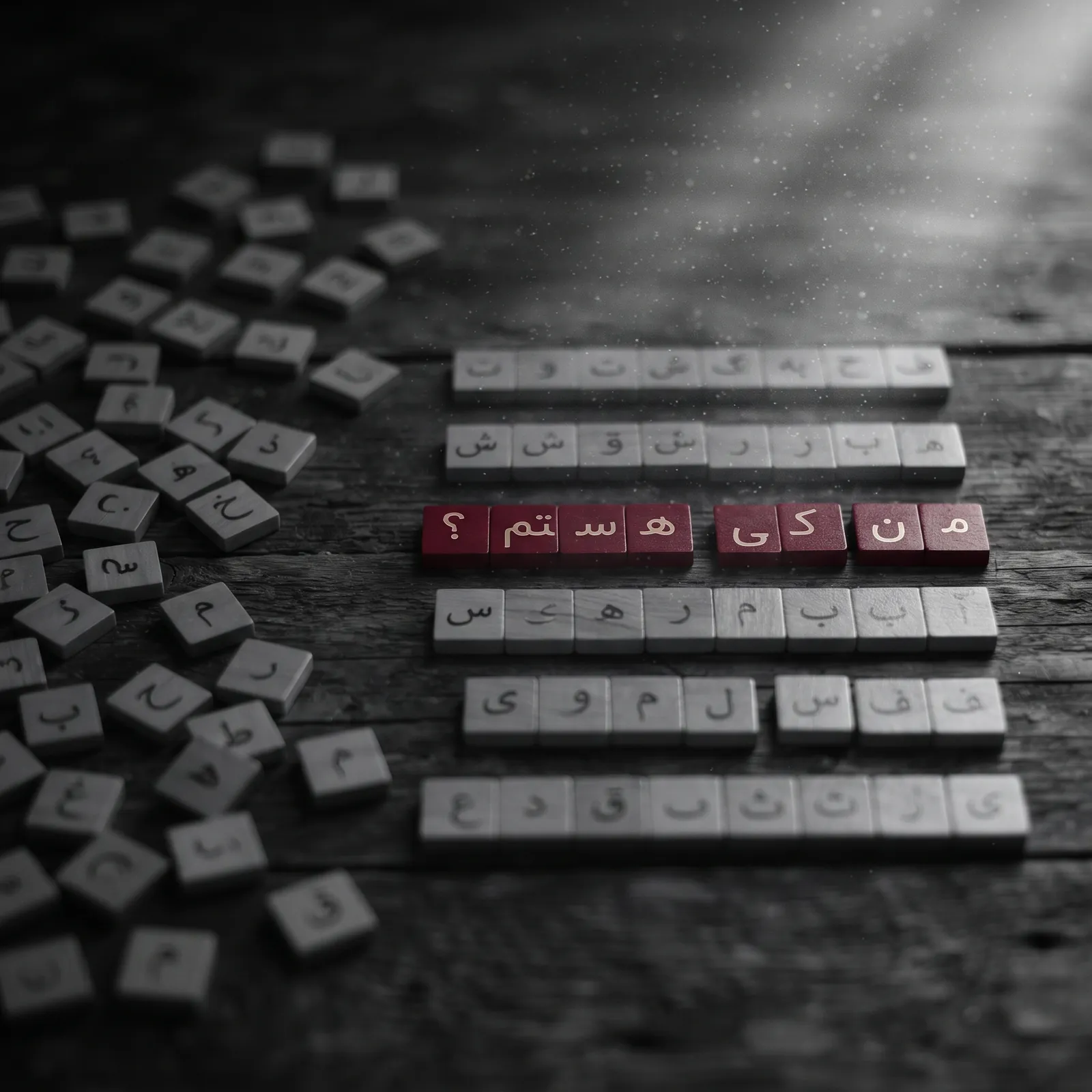
Four letters remain on the table: «ن», «ع», «م», «ا». None of them alone has a meaning, yet none is nothing; a possibility sleeps in each. This theory calls such a unit in existence a “token”: the smallest part within the setting of the vacuum, which has nothing but a pull and a slight oscillation.
The letters settle beside each other, each time in a new “arrangement.” With no interference from outside, these four letters have twenty-four possible arrangements. Most convey no meaning and collapse out of the mind; what remains is meaningful: «معنا» (“meaning”). Sometimes these combinations yield more than one meaningful word. Nature did the same: what endured was not just one, nor only one in a single grammar. We call this lasting “stability” and this filter the “stability sieve.” The universe works the same way: the pull draws parts together, and if their oscillations become attuned, that is, reach resonance, their bond stays stable.
An arrangement that passes through this sieve is a “pattern.” “Meaning” is no longer four scattered letters; it is a unit that holds within itself each letter’s place, their order and their bond. This inner order, with all its information, is what this theory calls “consciousness”; it is nothing added to the pattern, it is the pattern’s own order.
The complete pattern passes through a “threshold” and takes on a new face that was in none of the letters: the word gives meaning. We call this face the “phenotype,” and physics calls such a moment “emergence.” So meaning is the phenotype of the pattern, and consciousness is the pattern itself.
Now “meaning” sits in a sentence: “Where does meaning come from?” To take its place in a larger pattern, every pattern must gauge its surroundings; this is “reading.” Inside the sentence, each word has a fixed place and behaves according to the sentence’s order. For its words, the sentence is a “field pattern,” and it stays stable as long as its parts keep its order. But for the paragraph, that same sentence is just a single token. Word in sentence, sentence in paragraph, paragraph in page, page in book: each pattern is a field for its parts and, for the larger pattern, a new token.
The universe is written the same way: from the tremors of the vacuum to the particle, from particle to molecule, from molecule to cell, and from cell to human. In the next cards we follow these steps one by one in the universe itself.
3
Empty
Is the vacuum really Empty?
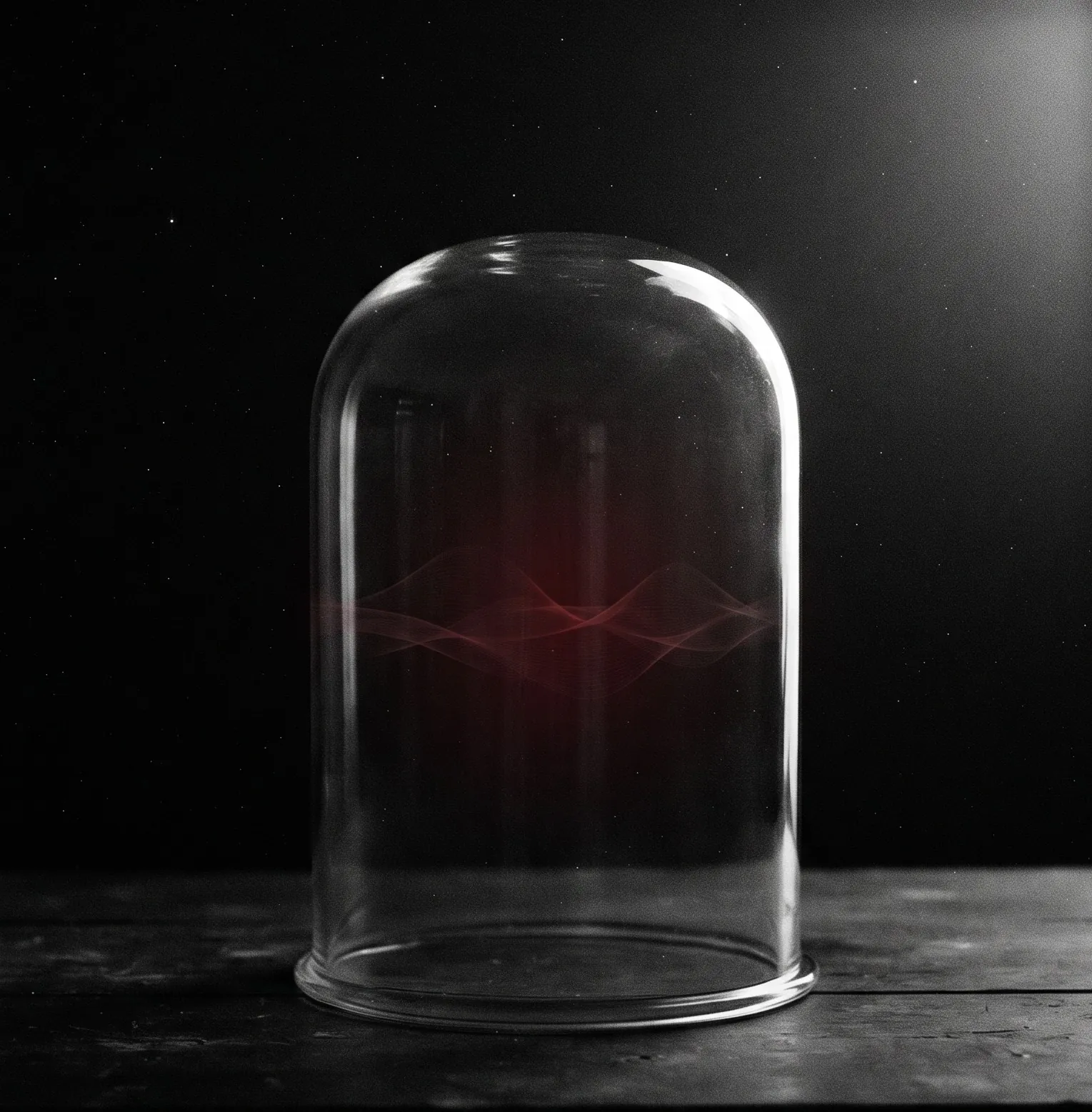
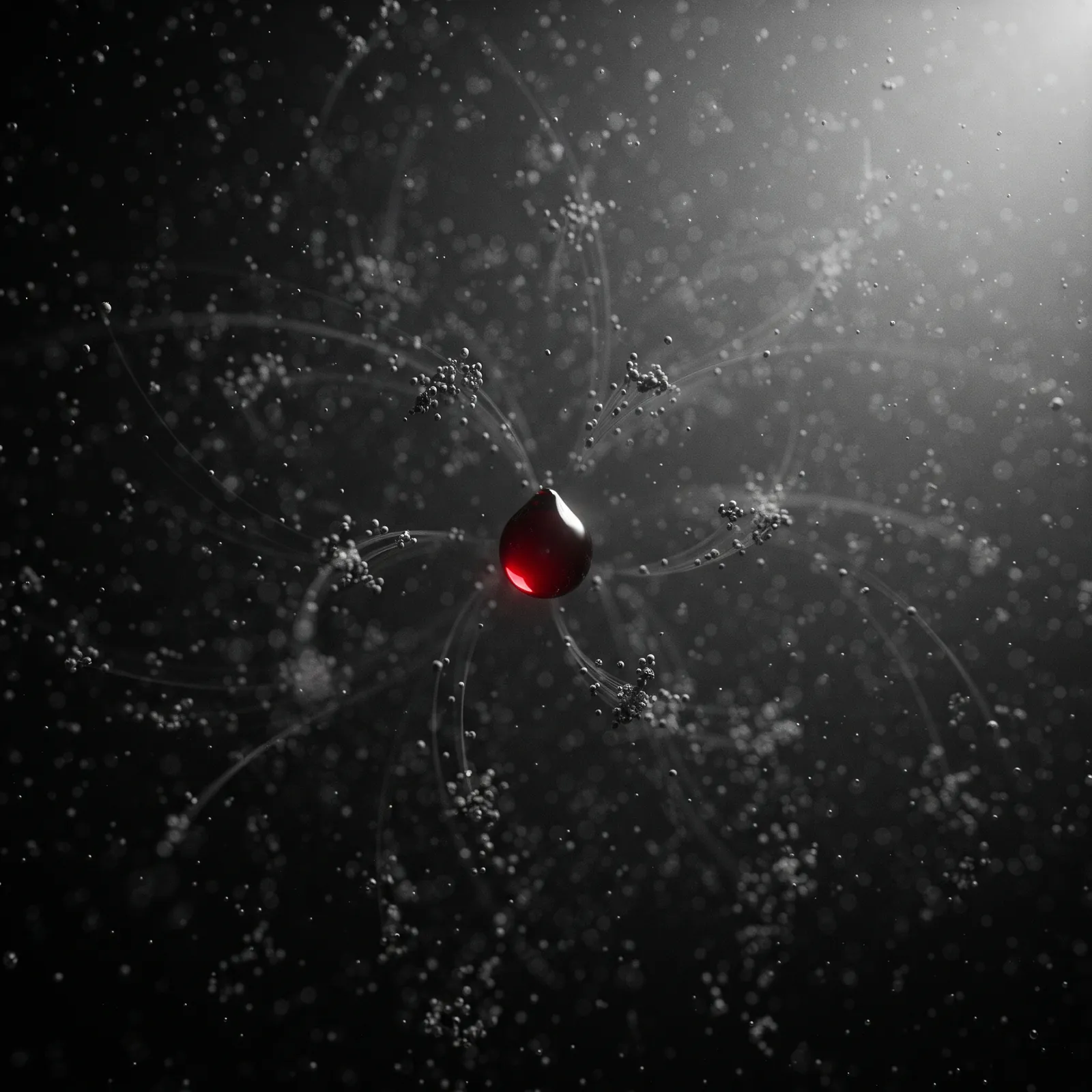
A glass is empty; there is almost nothing physically detectable in it. So it is with the dark expanse between two galaxies, which we take to be absolute nothingness. But physics has lifted the veil from a secret: even in the coldest, darkest silence of the vacuum, something is quietly trembling. This vibration cannot be touched by hand, but our instruments have recorded its dance. These tremors are the very tokens we met in the letters on the table: the raw alphabet with which the universe began.
Scientific finding: The force that Casimir predicted between two uncharged plates in a vacuum has been measured (Lamoreaux, Physical Review Letters, 1997); and the oscillations of the field in its vacuum state have been measured directly (Benea-Chelmus et al., Nature, 2019).
4
Creator
Does the universe have a Creator?
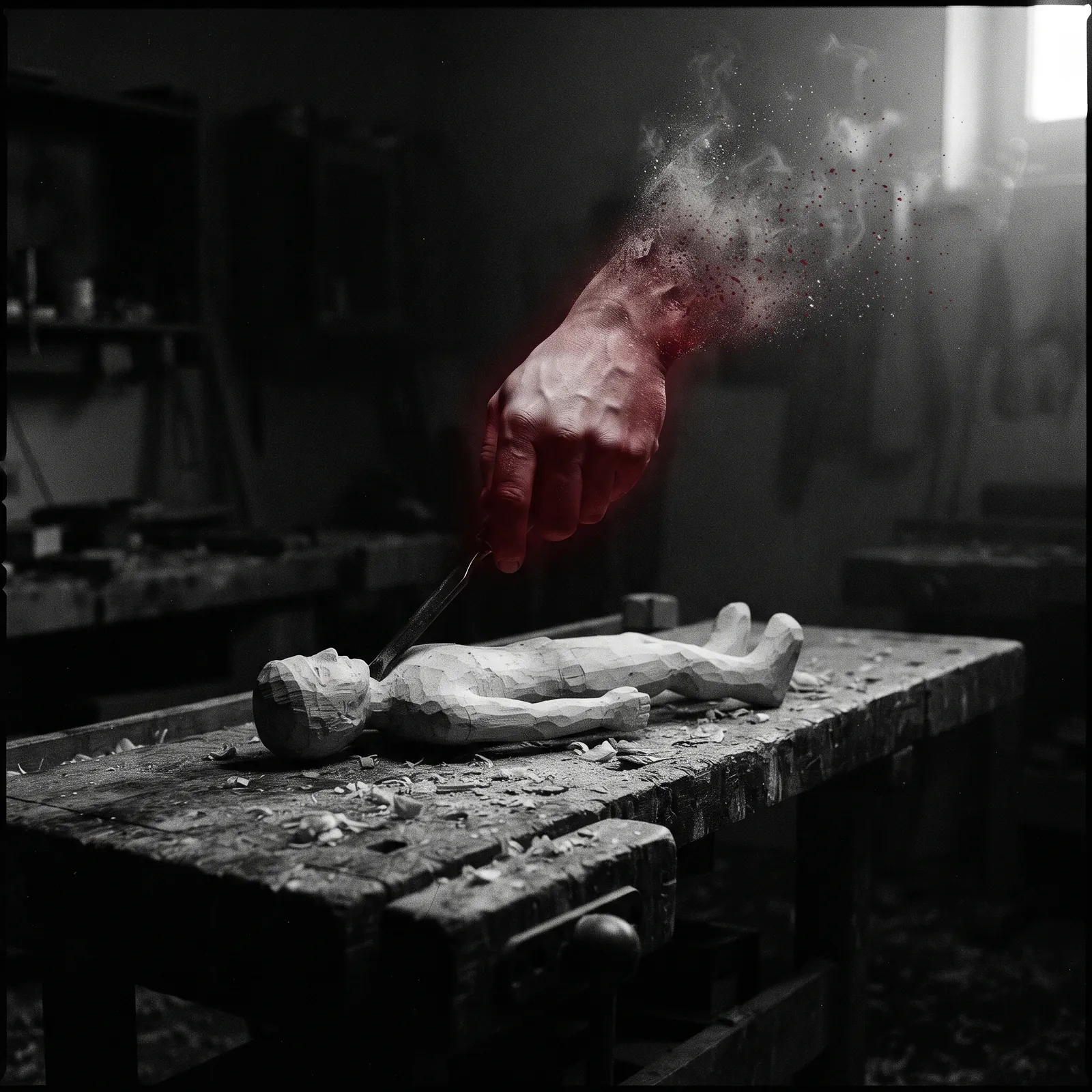
A stone does not move until it is struck, and wood does not become a chair until it is sawn. The human eye believes what it sees.
For centuries we took the vacuum to be a handful of nothing and nonexistence, and we justified ourselves: “It is impossible for all this color and diversity to come out of nothing; so surely a supernatural carpenter has worked a miracle.” But this whole palace of thought was built on one rotten pillar: that the vacuum is nothing. When we saw that in the depths of darkness a dance and a pulse flow, that illusion collapsed. The universe did not come from nothing, so that it would need an architect.
5
Made
What is the universe Made of?
The same pull and resonance that seated the letters beside each other works in the fabric of the cosmos as well: the pull draws parts into each other’s embrace, and resonance makes their bond stable. When parts join hands, a phenomenon is born that is no longer any one of them: “a whole.” There is no wetness in hydrogen and none in oxygen; yet from their bond, water drips. This is “emergence”: the whole has something that was in none of its parts.
Scientific finding: Philip Anderson showed that large collections of simple parts give rise to behaviors found in no part alone, and that each level of organization has its own new properties and laws (Anderson, Science, 1972).
6
Chance
Did the universe come about by Chance?
The same stability sieve that, out of the twenty-four arrangements of four letters, kept only the meaningful ones, works in the workshop of the cosmos too. Billions of combinations were born and collapsed at once; the universe is not a museum of accidents but a showcase of the combinations that managed to endure. Survival is nature’s merciless sieve: in the dance of quanta, in the structure of living molecules, and in the fate of civilizations.
Scientific finding: At the quantum level, of all possible states only those that are stable against interaction with the environment become objective and lasting, a phenomenon called “quantum Darwinism” (Zurek, Nature Physics, 2009); and at the molecular level, before any life, among self-replicating molecules those that replicate better are selected (Eigen, Naturwissenschaften, 1971).
7
Meaning
Where does Meaning come from?
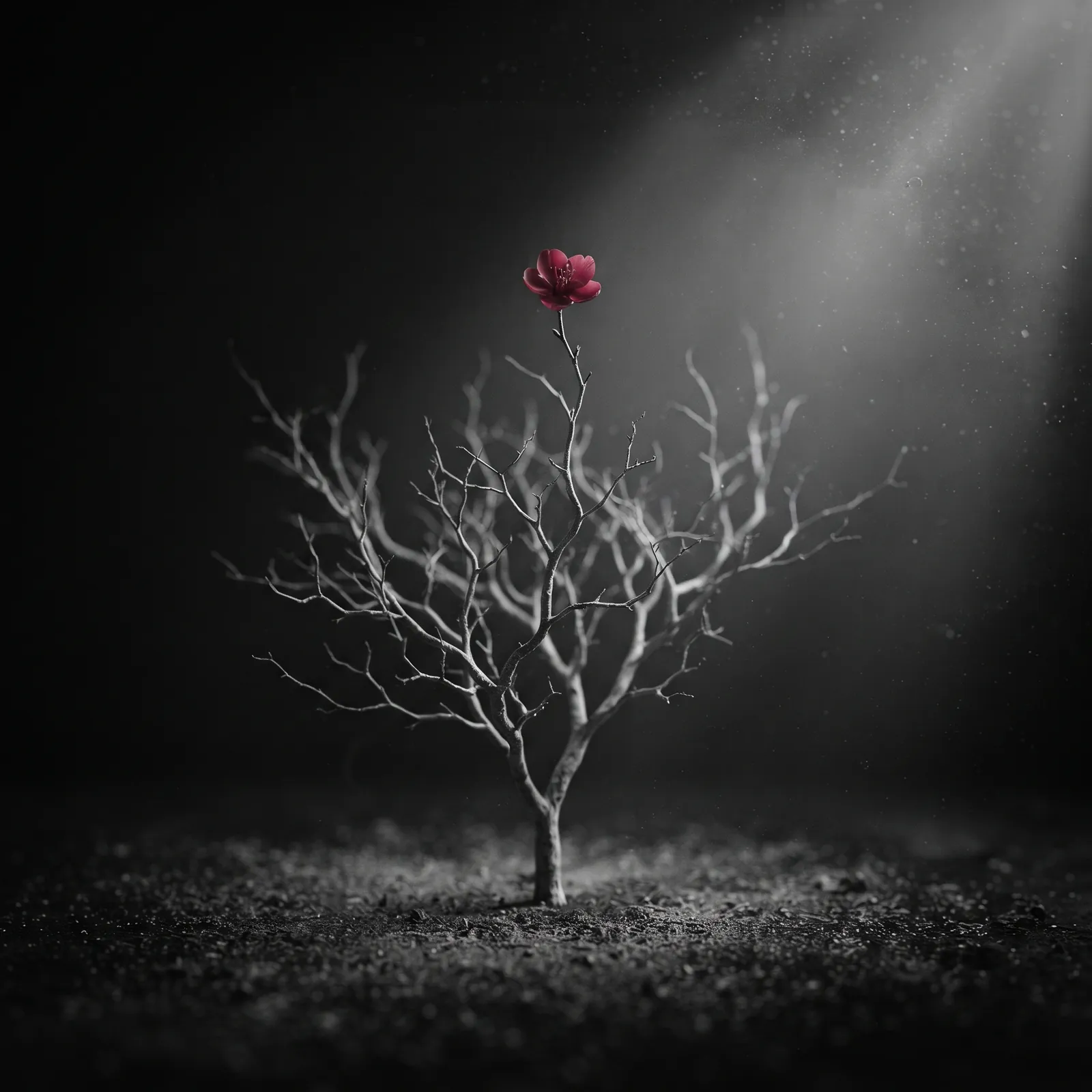
Meaning was not poured from the sky into the vessel of words, and no one pinned it onto words from outside; it was born at the very moment the pattern of letters crossed the threshold. The cosmos made the same astonishing journey: from the tremors of a silence that was nothing, to bond and resonance, and from stability to awareness and meaning. The human is not made by the hand of any sovereign; he is the most glorious blossom on the self-sprung tree of existence. But when did this arrangement come to life?
8
Life
How did Life begin?
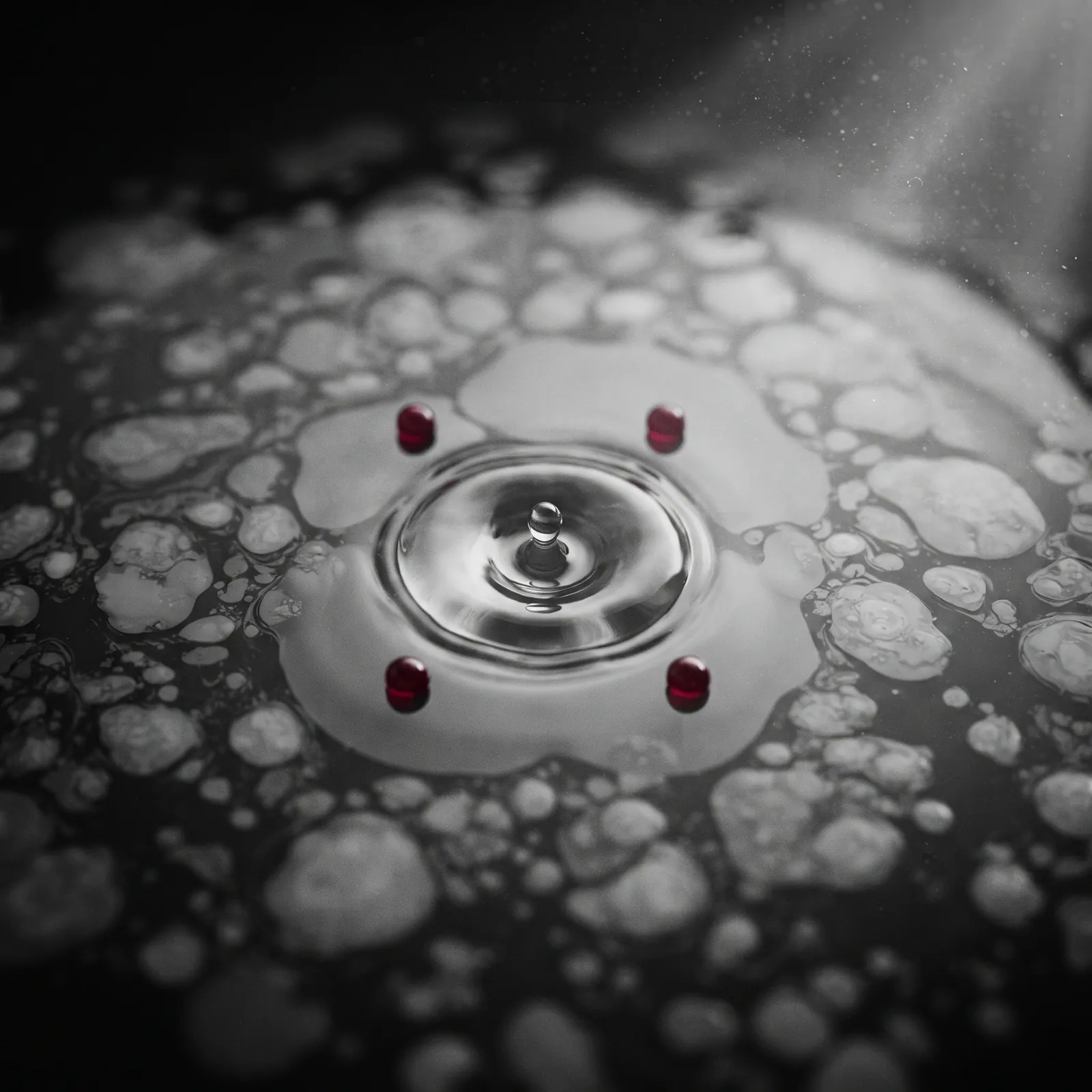
A drop of dish soap falls on the greasy water of a pan. The grease spots, with no hand touching them, suddenly draw back and break into tiny grains in the water. No outside force guides them; the whole secret is in the shape of the soap molecule. Soap is made from fat itself.
But billions of years before the first soap, nature probably made this same molecule with no maker. On the ocean floor, hydrogen and carbon gas were pouring from hot vents. On the surface of iron-bearing rocks, carbon atoms joined one by one and built long chains. Most broke and scattered. But chains whose head ended in an oxygen-bearing group stayed stable: a tail that flees water and a head that seeks it. Similar fatty compounds have also been found in meteorites.
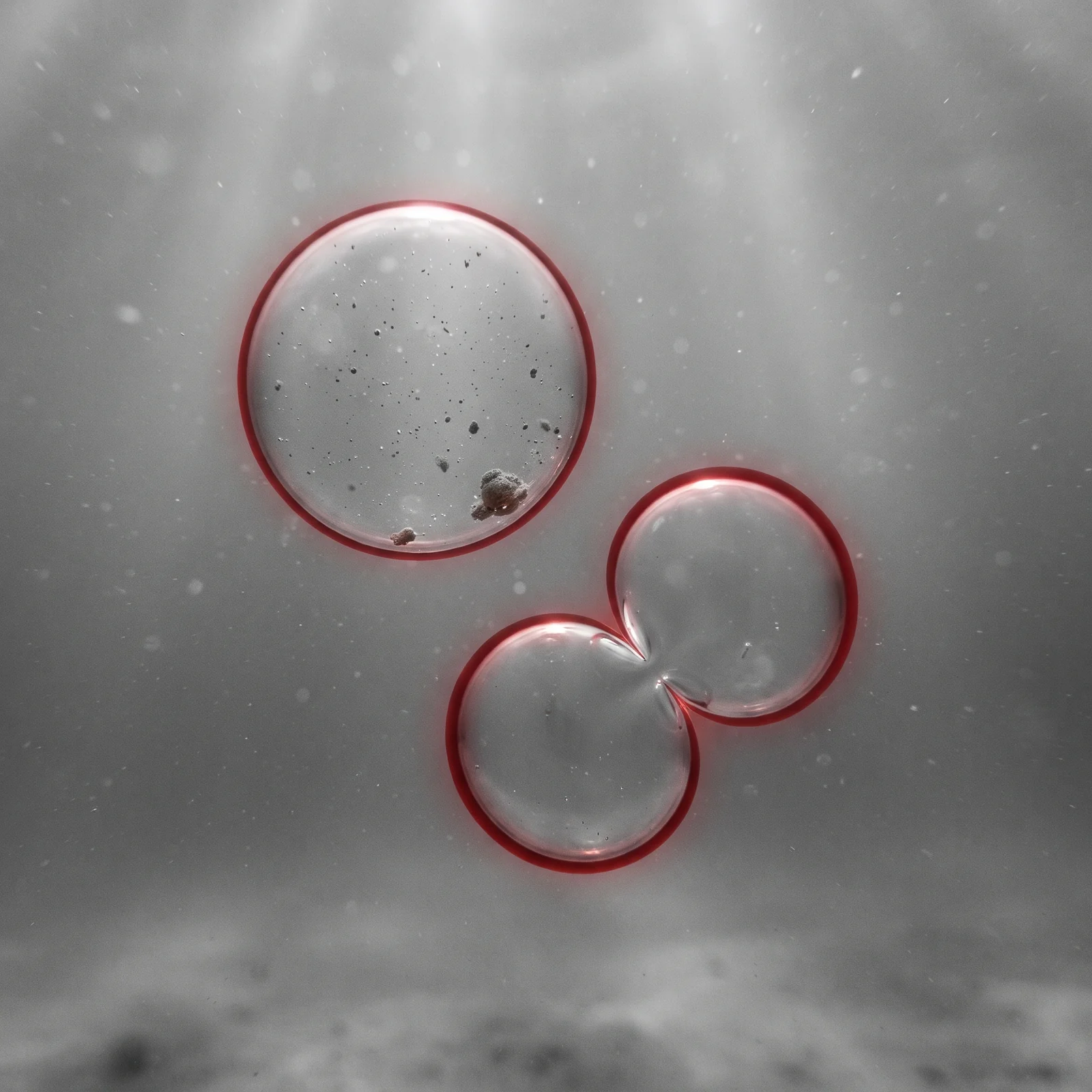
When billions of these molecules are released into water, the tails want to hide from the water and the heads want to stay in it. Only one arrangement leaves both at ease: two rows of molecules, back to back, tails facing each other and heads facing the water. If this double layer grows large enough, its edges meet and make a closed bubble.
No one designed or built this bubble. Of all possible arrangements, only this structure endured in water; the rest collapsed at once. This is the “stability sieve” we saw with the letters on the table.
Scientific finding: Fatty-acid chains were made, with no living thing, under conditions like those of hot-water vents (McCollom, Ritter and Simoneit, Origins of Life and Evolution of the Biosphere, 1999). These two-ended molecules spontaneously form double layers and closed bubbles in water. Fatty compounds extracted from the Murchison meteorite also formed these same bubbles in water (Deamer, Nature, 1985).
9
Cell
How did the first Cell come to be?
A small bubble floats in the water of a shallow lake. Its shell is formed from the same fatty molecules and is so thin that the eye cannot see it; yet this invisible shell has brought a new boundary into the world: “inside” and “outside.”
The water inside the bubble is no longer the water of the lake. Every molecule trapped as the shell closed now stays in the shelter of neighborhood with the other molecules. In the open expanse of the lake, waves scatter molecules apart, and every bond falls apart before it can form. But inside the bubble, distances stay short and the chance of bonding grows. The wind carries off the scattered letters on the table; letters left in a closed box stay together and get a chance at a meaningful arrangement.
These bubbles do not stay still. New fat molecules from the surrounding water join their shell and make them larger. When the size passes a limit, the slightest shake of the water pinches them at the waist and splits them into two bubbles: growth and multiplication, with no organs or complex biological machinery.
Even so, the bubble is not yet alive. It takes its shell from outside, and whatever it holds is scattered by chance between the two halves when it divides. For life to begin, another step was needed: a “script” inside the bubble from which a new copy could be made.
Scientific finding: Fatty-acid bubbles grow by taking up new molecules from their surroundings and divide in two with no biological mechanism (Zhu and Szostak, Journal of the American Chemical Society, 2009).
Proposal of this theory: The boundary between inside and outside is the first condition for a pattern to endure in the living world. Without this boundary, no pattern can save itself from dispersal.
10
Energy
Where did the first living thing get its Energy?
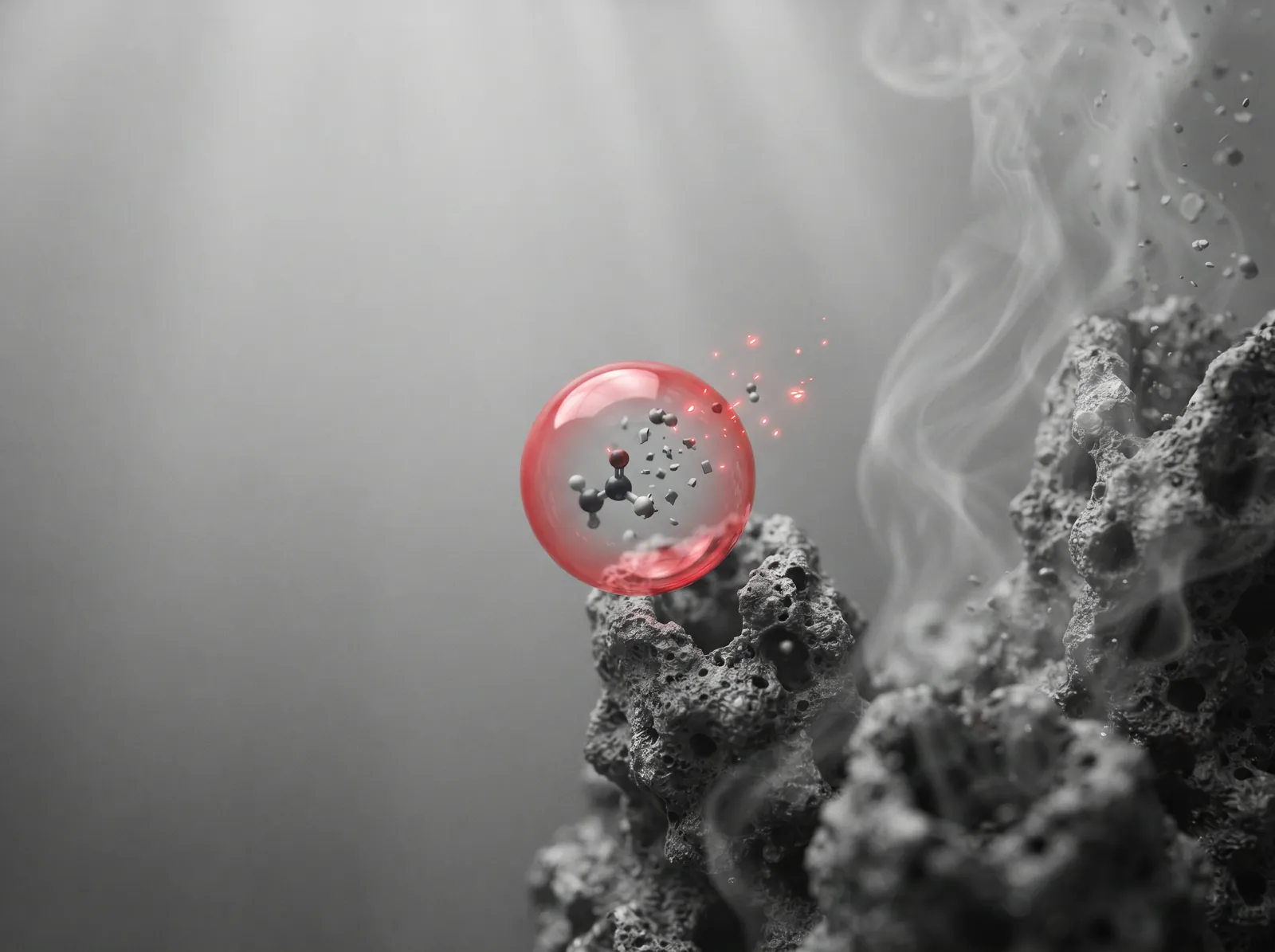
On the dark ocean floor, hot vents blow out warm water rich in hydrogen. This water is not the same as the cold ocean water, which in those days was probably more acidic. Between the two, just like the two sides of a dam, there is a difference that can do work. In the tiny pores of the rocks around these vents, fatty bubbles have settled.
Inside some of these bubbles, a combination of materials formed that did something new: it broke other molecules, and used the energy released to make breaking the next ones possible; just like a fire where burning each piece of wood supplies the heat to burn the next. This cycle kept itself lit as long as raw material was at hand.
But these combinations were fragile. With every division of the bubble, materials were scattered by chance between the two halves, and many of these cycles went out forever. Only those that managed to make a copy of themselves lasted. To last, “burning” was not enough; a way had to be found to pass the instruction for this burning from one generation to the next.
Proposal of this theory: All of today’s cells make energy from the acidity difference across the membrane (the proton gradient) (Mitchell, Nobel Prize in Chemistry 1978); and at alkaline hot-water vents there is a natural acidity difference between vent water and ocean water (Kelley et al., Nature, 2001). According to the hypothesis of Lane and Martin, life may have begun from this very difference (Cell, 2012).
11
Code
How was the Code of life written?
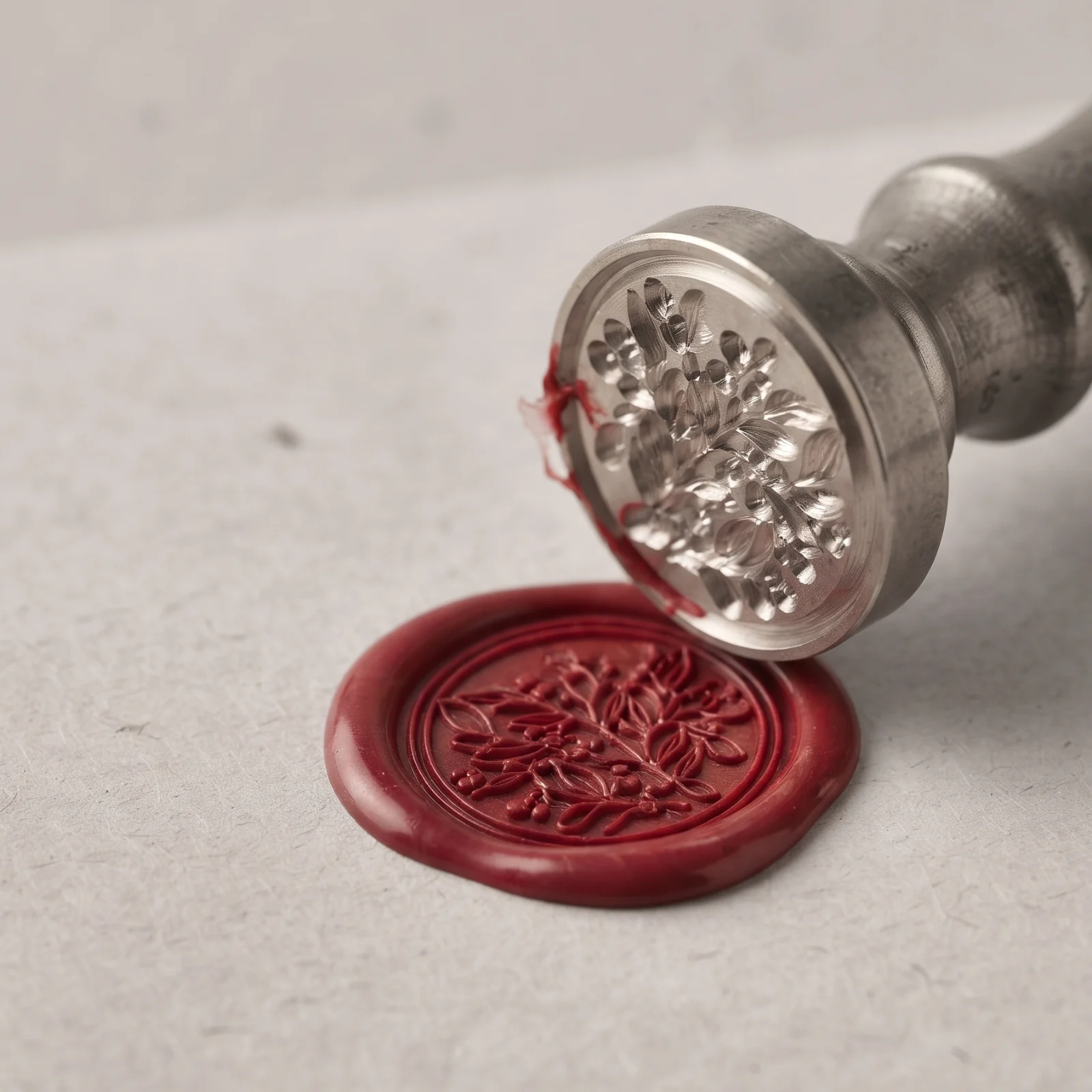
A seal is pressed into hot wax. The impression left on the wax is the reverse of the seal: wherever the seal was raised, the wax is hollow. If this wax, once cooled, is pressed onto fresh wax, the impression comes back and the first seal appears again. From the reverse, the original is made.
Life copies its script in the same way. The alphabet of life has four tokens: four kinds of nucleotide. Experiments have shown that some of these tokens can be made from simple molecules under conditions compatible with the early Earth. Tokens line up in a strand called RNA. Just as “meaning” is made of four letters and its meaning lies in their order, whatever the strand says lies in the order of its tokens.
Each token pairs with only one token. A token wandering in the water approaches the strand and reads the shape of the token across from it; if it is its partner, it settles, if not, it passes. Pairing is the product of this reading. Token by token, a reversed strand forms beside the first: the wax that took the seal’s impression. From this reverse, the first strand can be made again. Enzyme-free copying of an RNA template inside the same fatty bubbles of card 9 has also been shown, though not as a complete cycle.
Sometimes a piece of wax sticks to the impression and stays there, and every copy taken from that impression carries that piece with it. In the strand too, sometimes a wrong token sits in place of its partner and is repeated in all copies from then on; that is a mutation. Most of these errors spoil the script and vanish. Sometimes an error makes a copy that copies better, and that one stays. But if errors pass a limit, the copies drift so far from the original that no script remains at all. The script of life was written line by line, by trial and error, in the same sieve we saw in card 6.
Later DNA appeared: a sturdier copy for keeping the same script. The complete script of a person today is about three billion token pairs.
But so far, the strand is only a template for copying. The next step is a script that itself takes part in making the copy.
Scientific finding: Two of the four RNA tokens have been made from simple molecules under conditions compatible with the early Earth (Powner, Gerland and Sutherland, Nature, 2009). An RNA template has been copied inside fatty-acid bubbles, with no enzyme (Adamala and Szostak, Science, 2013). The information a replicating unit can hold is limited by its copying error rate (Eigen and Schuster, Naturwissenschaften, 1977). The human genome has about 3 billion token pairs (International Human Genome Sequencing Consortium, Nature, 2001).
Proposal of this theory: The pattern is the product of trial and error; the same logic of selecting stable states that we saw in card 6.
12
Copy
Can a text Copy itself?
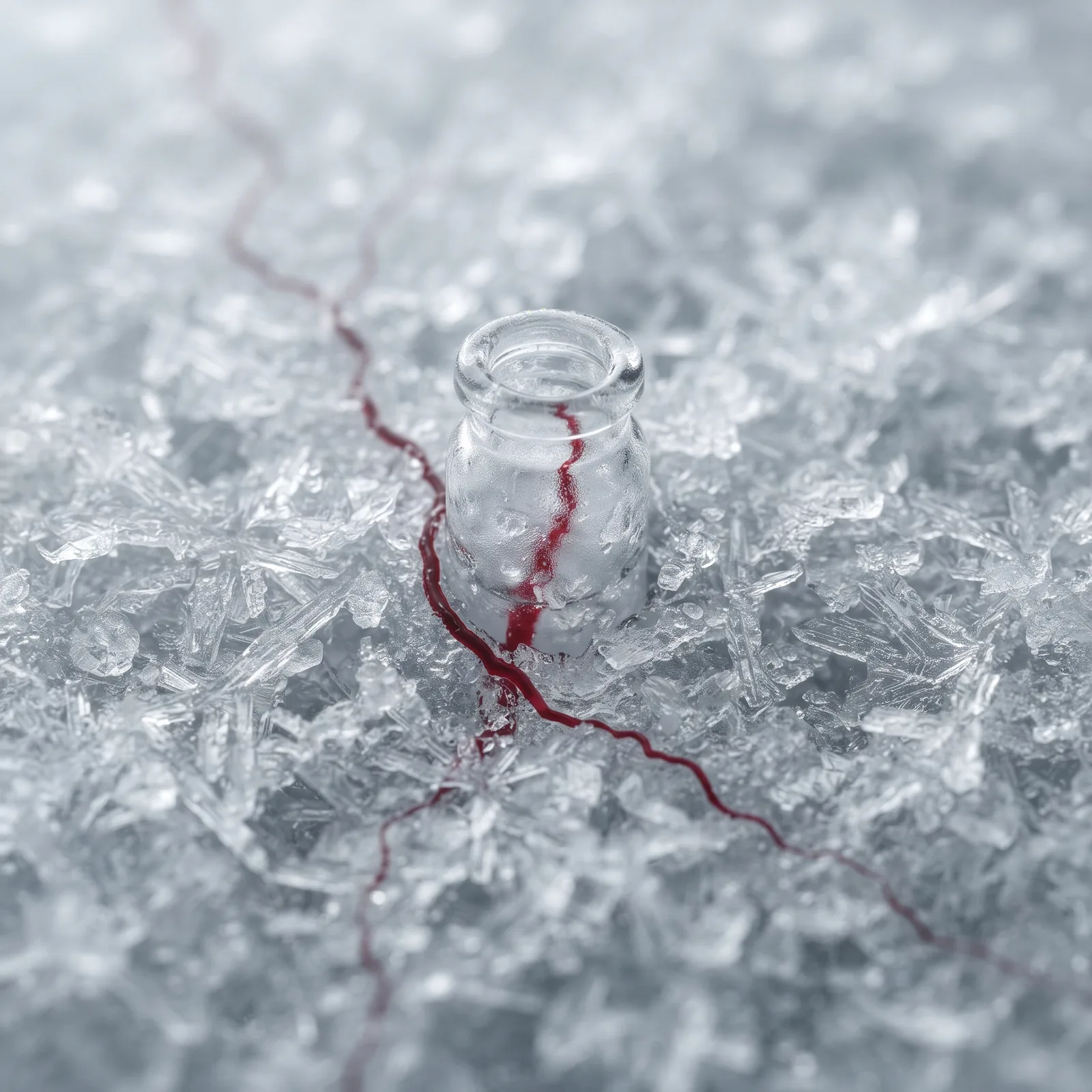
A small tube sits in sub-zero cold. The salty water inside has not frozen completely; between the ice crystals, veins of liquid remain. In these veins, an RNA strand of only forty-five tokens joins three-token pieces on the basis of a guide strand.
This strand has two abilities: it can make its own reverse, and from that reverse, a strand with its own sequence. Researchers have shown both reactions, but separately; these two steps have not yet joined in one continuous cycle. The work is also slow: after ten weeks, only a very small portion of the tokens had been copied.
Even so, this is a seal that also takes part in pressing its own impression. Besides holding the script, RNA drives a reaction like an enzyme. This is the same phenotype we saw in card 2: the face a pattern takes after crossing the threshold.
If one day these two steps reach a continuous cycle, the pattern will no longer wait for chance in order to last. Every new copy, with its errors, will be a new test; and the copy that copies better will last longer. Evolution begins from there.
Researchers chose this strand: from among a heap of random strands, round after round, they kept the best. In the lab, the sieve is turned by the researcher’s hand; in nature, only by stability.
Nature had no researcher’s hand, but it had time, varied environments and countless opportunities. Could these have produced a strand with such an ability? This experiment has not given the final answer. But it has shown that part of the work of self-copying can be done by a strand far shorter than expected.
Scientific finding: RNA both holds information and works like an enzyme (Cech and Altman, Nobel Prize in Chemistry 1989). A 45-token RNA strand, in half-frozen salt water, built both its complementary strand and, in a separate reaction, a strand with its own sequence. The yield of both reactions was about 0.2 percent in 72 days (Gianni et al., Science, 2026).
Open question: Can these two reactions turn into a stable cycle in one system? And how could such a system have formed without a researcher’s selection?
Proposal of this theory: When a pattern’s order takes part in making new copies of itself, a new phenotype has appeared: a pattern that does not merely remain, but also takes part in its own continuation.
13
Conscious
Is a living cell Conscious?
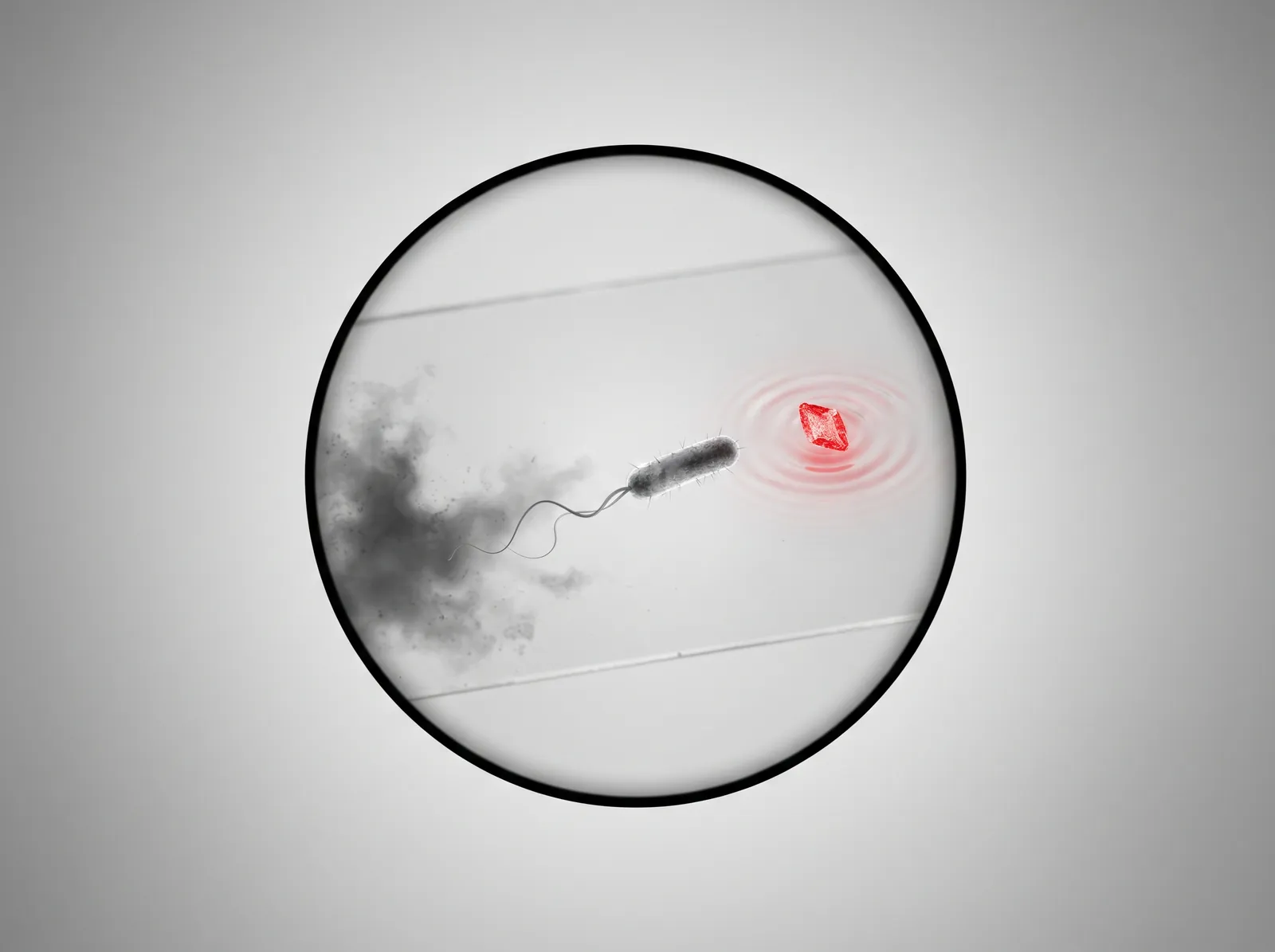
In a drop of water, under a microscope, a bacterium swims. It has no eyes, no brain, not even a single nerve cell. But when a few grains of sugar dissolve in one corner of the drop, the bacterium heads that way. When a harmful substance spreads in another corner, it moves away from it. As if it “knows” what is good for it.
The secret of this behavior lies again in the shell. The shell of the first bubbles was passive: whatever passed through, passed through by itself. But the shell of a living cell is active. In it sit “pumps” that ceaselessly push ions out and draw them in, even against the direction they would go on their own. These pumps are like guards who keep opening and closing the fortress gate so that the inside is always different from the outside. If they let up for a moment, inside and outside become one, and the cell dies.
On this same shell there are also receptors. When a sugar molecule binds to a receptor, a chemical message reaches the bacterium’s twisting tail. Without “seeing” the way, the bacterium acts simply. If the sugar around it is higher than a few seconds ago, it keeps going the same way. If lower, it tumbles in place and tries a new direction. From repeating this simple rule, an accurate path to food is built; just as from the simple rules of each bird, the orderly flight of a flock arises.
This constant conversation with the environment, sensing and responding in order to survive, is called “irritability.” But who senses? No molecule in the cell knows anything by itself. The answer must be sought in the cell itself.
For the molecules inside it, the cell is the same “field pattern” that the sentence was for its words. A sugar molecule outside the cell wanders freely in water. The moment it passes through the shell, it is caught in a production line where the place of every step is known in advance. At one station it is broken, its pieces go on to the next stations, and its energy is deposited in a set place. The molecule is the same molecule, but inside this pattern it can only behave according to the pattern’s order; an order different from that of the outside world.
So when a receptor on the shell “recognizes” a sugar molecule, what actually happens is that the cell’s pattern reads the order of another pattern, the shape of the sugar molecule, and adjusts its own order accordingly. This is “reading.” Irritability is this reading at the level of the cell. A cell that cannot read its environment does not last, and the stability sieve sets it aside.
So, is the cell conscious? Not in the sense we usually mean. What we see in the cell is not consciousness; it is irritability, the reading that a pattern performs in order to last.
Scientific finding: An enzyme in the cell membrane, later named the sodium-potassium pump, actively moves ions and maintains the difference between inside and outside (Skou, Biochimica et Biophysica Acta, 1957; Nobel Prize in Chemistry 1997); bacteria swim toward nutrients (Adler, Science, 1966) and away from harmful substances (Tso and Adler, Journal of Bacteriology, 1974); a bacterium compares its environment in this moment with a few seconds ago and changes direction accordingly (Segall, Block and Berg, PNAS, 1986).
Proposal of this theory: The cell is a pattern that determines the order of the molecules inside it. Irritability is this pattern’s reading of the environment; a condition of survival, not consciousness itself.
14
Awareness
What is the difference between consciousness and Awareness?
Millions of years after the first cell, cells sat beside each other like words in a sentence and built a larger living being. This collection is the “field pattern” for its cells. Each cell, like each word, has a meaning and a role: a skin cell, a bone cell, a liver cell. All carry the same code of life, but the place and work of each cell is set by the order of the larger pattern, not by the cell itself.
With this larger pattern, the boundary grew larger too. It is no longer a thin layer separating inside from outside; the skin, eye, ear and nervous system are the boundary of the whole body. Reading the environment, for such a body, is beyond the power of one cell’s membrane; for this reason, creatures with a nervous system were the ones that lasted.
A deer in a meadow hears a sound. It lifts its head, turns its ears, sniffs the air and watches its surroundings. Now it can choose between staying and fleeing. This is the cell’s “reading,” this time at the scale of the whole creature: a pattern that reads its environment, gauges it and directs its relation to it. We call this ability “awareness.”
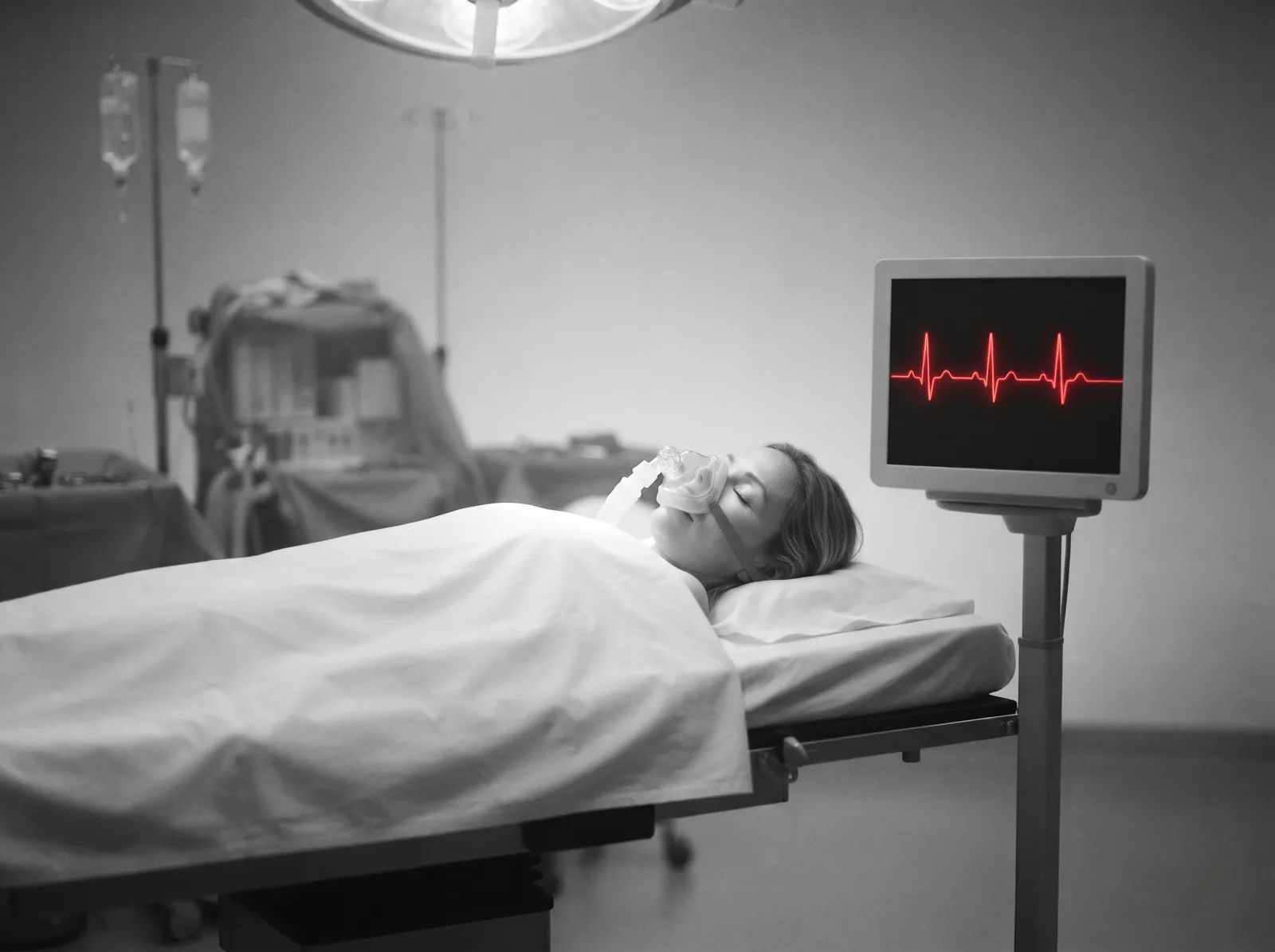
But is awareness the same as consciousness? The answer is in the operating room. A patient is anesthetized. His awareness is switched off completely: he does not see, does not hear, feels and remembers nothing. But his heart beats, his lungs breathe, and his body heals the surgical wound. The pattern that made him, with all its order, is still in place. Hours later he opens his eyes and is the same person, with the same memories and the same name.
Awareness switches off and on, but the pattern remains. If awareness were consciousness itself, nothing of “him” would remain when it went off. So awareness is a living being’s reading of the world; and consciousness is the order that, even under anesthesia, keeps someone the same someone.
Scientific finding: The nucleus of a tadpole intestinal cell, when transferred into an egg, made a healthy tadpole; that is, every cell holds the code of the whole body (Gurdon, Journal of Embryology and Experimental Morphology, 1962; Nobel Prize in Physiology or Medicine 2012); general anesthesia reversibly switches off awareness while the body’s vital functions continue (Brown, Lydic and Schiff, New England Journal of Medicine, 2010).
15
Animal
What is the difference between a human and an Animal?
A deer hears a sound and leaps. This leap always has one meaning: fleeing. Each time its legs push off the ground, it is for that one thing: staying alive. Even an orangutan that picks up a stick to draw food out of a termite nest and keeps it for next time is still in the same circuit: food and survival. An animal’s reaction, however clever, serves staying alive.
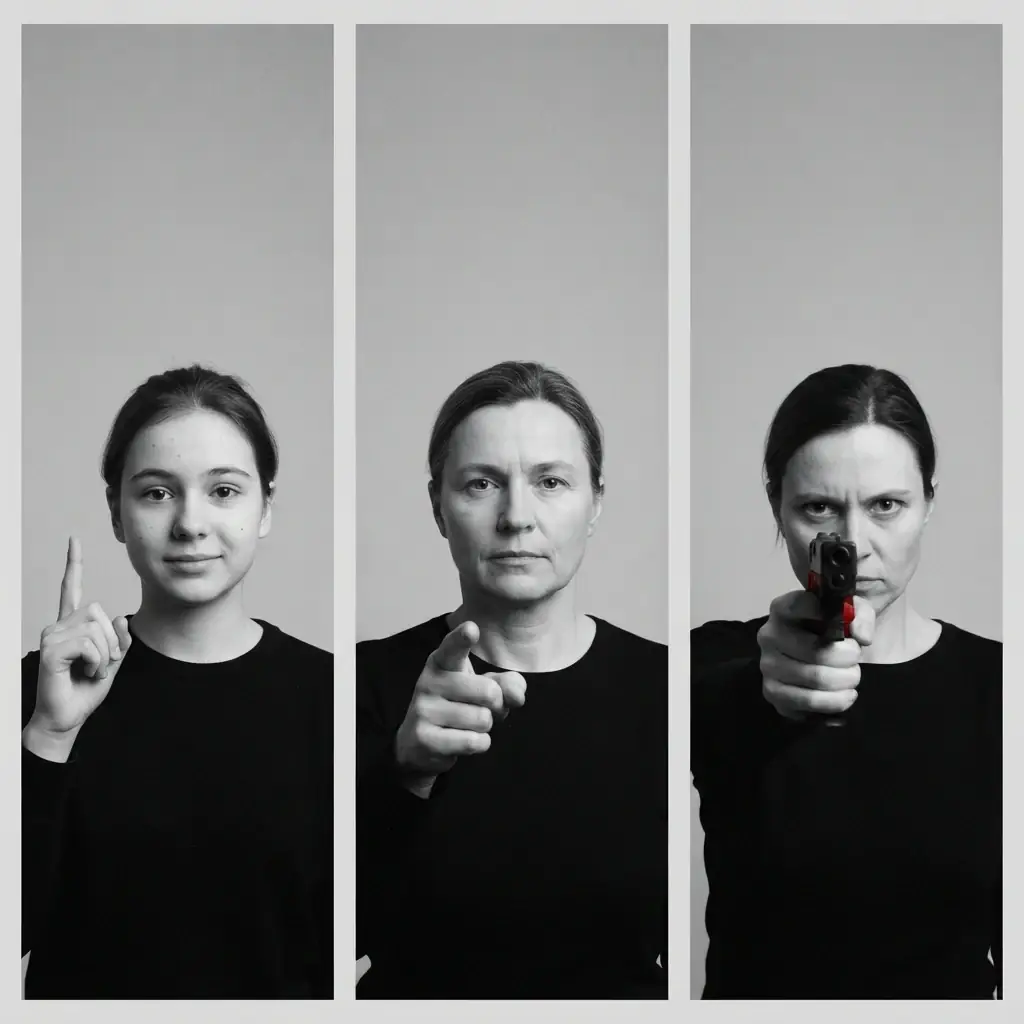
Now a finger bends and straightens. The muscles are the same, the bones the same, and the nerve command nearly the same. But this movement one time shows a passerby the way, one time asks permission to speak in class, and one time squeezes a trigger and takes a life. Bone and muscle alone do not say which of these is happening.
In card 2 we saw that a word in different sentences takes different meanings; the larger pattern gives the meaning. The movement of the finger is a token too, and its meaning is set by the pattern in which the movement sits. Part of this pattern is outside: a classroom, a passerby or a weapon. Part is in the mind: a question it wants to ask, a destination it wants to show, or a target it wants to hit.
Here lies the human’s main power. A human can, in the mind, form a pattern of something that is not yet before him; change it, share it with others and set to work to build it. The moon is in the sky, but the way to it did not exist once. The human built this way, before building it in the world, in maps, calculations and designs. He suffered for years, spent vast wealth and risked his life to turn a possibility into reality; something with no justification from the standpoint of survival. No deer has ever leapt to reach the stars.
This same power can build a road to the moon, or drive a human to kill a stranger, for a reason that has nothing to do with himself, with the movement of one finger. So the issue is not only having power; it is which pattern sits in the mind and which way it takes this power.
Proposal of this theory: The difference between human and animal is not in body and movement; it is in the pattern that sits behind every decision and every movement. A human can build in the mind the pattern of a world that is not yet, change it, share it with others, and act for it in the world of now.
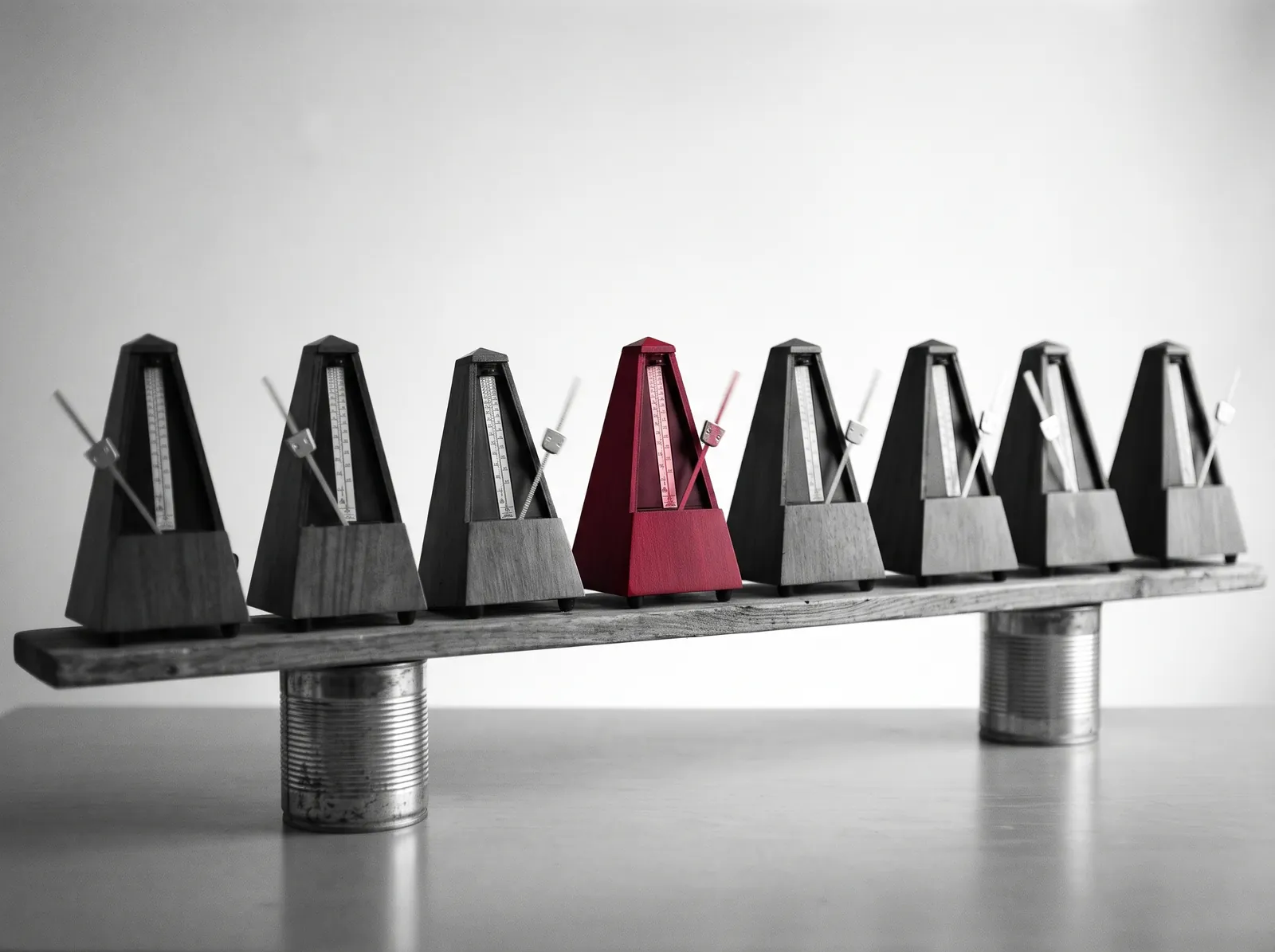
16
Consciousness
What is the difference between Information and consciousness?
Before a finger bends, a judgment takes place in the mind. This judgment does not look only at that moment; everything we have seen, learned, feared and grown attached to up to that day is present in it. But experience alone has no direction; direction is given by a goal. A student who studies for his future raises his finger to ask permission. One who wants to untangle a passerby’s trouble points the way with that same finger. And one who feels his life in danger pulls the trigger. Experiences plus a goal make the meaning of every movement. A human who reads this inner pattern in himself can question his goal and steer his movement toward the best outcome.
In card 2 we saw that consciousness is the pattern itself; the same order that makes the pattern’s survival and stability possible. This order does not sit idle; it reads, copies and builds. When a human reads a pattern so well that he can copy it, rebuild it, change it or apply it somewhere else, the same consciousness is now at work in his mind. In the human, the brain is in the pattern and the pattern in the brain; these two are one consciousness.
This is where the difference between information and consciousness lies. Knowing that water boils at a hundred degrees is information; being able to bring water to a boil with the tools at hand is consciousness. Knowing the sequence of a gene, and even drawing the full map of its chain, is information. But a human uses this knowledge to rebuild the gene, copy it and even change it. That is no longer information; it is consciousness.
Scientific finding: Humans built the complete genome of a bacterium from scratch and set a cell running with it (Gibson et al., Science, 2010), and built a tool that cuts DNA at a chosen place: CRISPR (Jinek et al., Science, 2012; Nobel Prize in Chemistry 2020).
17
Future
What is the Future of the human?
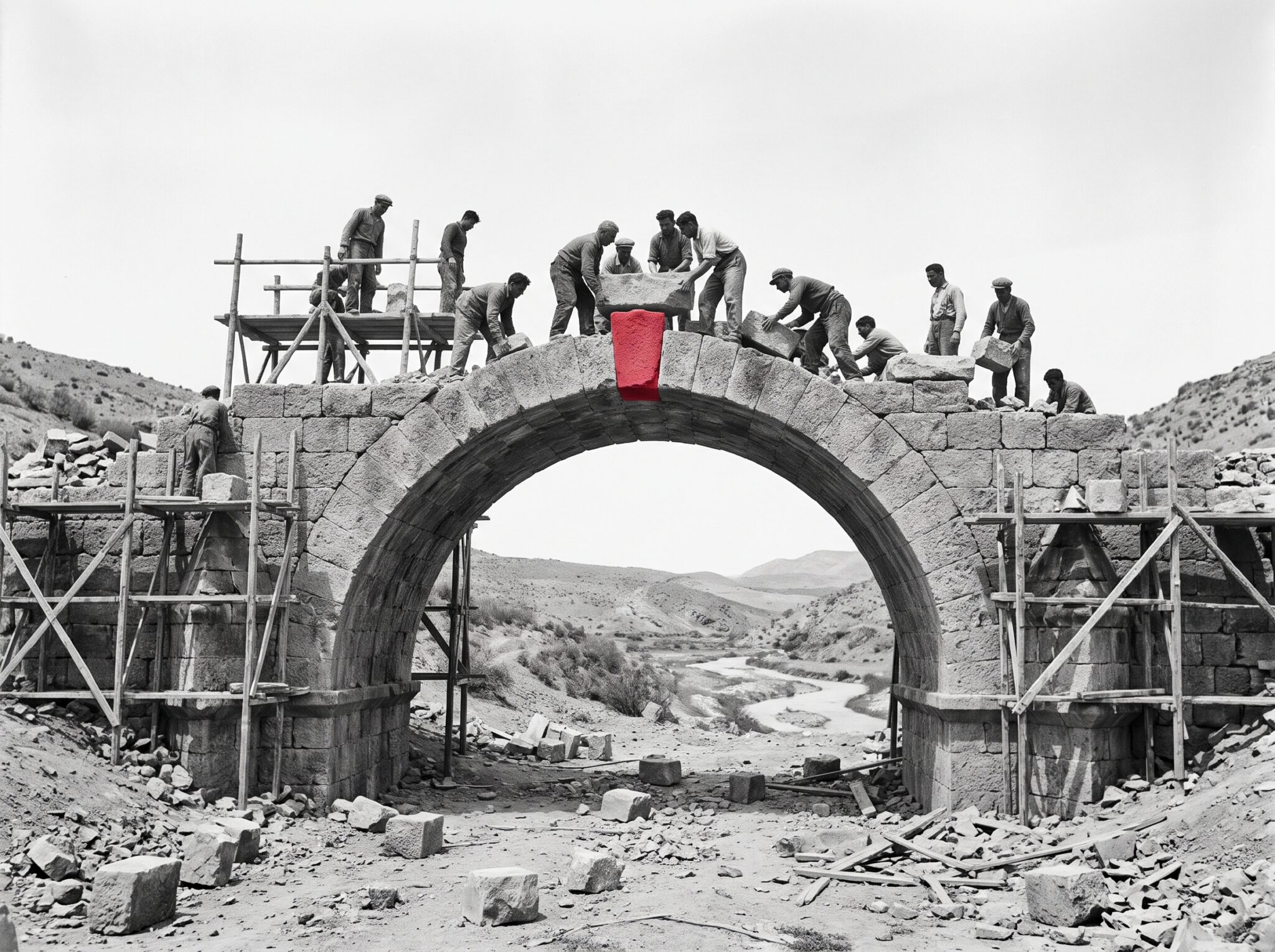
Stones lie on the ground one by one; each alone is only a stone. Hands set them side by side, and when the keystone drops into the middle of the arch, those same stones become a bridge that bears the load of caravans.
What we call civilization today is not a true civilization; it is the settling together of a group of humans. If humans build their living together not on need but on relations of truthfulness, cooperation, integrity, trust and kindness, what forms will no longer be a mere gathering; it will be their arrangement in an orderly, defined pattern. Just as letters sitting side by side make something beyond scattered letters, such an arrangement too brings something new into being: a conscious civilization.
The first consequence of this arrangement is the alignment of the vectors of civilization. Forces that today cancel each other out or wear themselves down in competition are set to work in one shared direction. The power once spent on fighting itself is freed and placed on the path of a shared goal.
In such a civilization, humans reach resonance: the pattern of one mind, with no mediation of words and beyond the known sensory channels, is read and rebuilt in another mind. The more conscious humans and their bonds, the higher this consciousness rises, and humans become tokens of a larger pattern whose power is limited to the power of none of them. This prediction is testable: those who have lived in such a relationship for a long time should get clearer results than others in tests of information transfer without sensory contact.
The human’s main power, on this horizon, is not religion, politics or nuclear power; it is the ability to read, rebuild and connect patterns, from the field pattern to the pattern of the cosmos. And that means the power of creation; from a new material to a new cosmos? If the universe came about by itself, who should define the human, if not himself?
Prediction of the consciousness theory and D-TOC for the human: A civilization built on truthfulness, cooperation, trust and kindness will have its vectors aligned, and its humans will join a larger pattern through the resonance of consciousness: a conscious civilization.