
«Civilizational Republic»
From democracy to various ideologies, every system was born with a promise to improve human life. Yet many of them have ended up facing strikingly similar crises. Is the problem in implementation—or in the design itself? This text tries to move beyond slogans and offer a structural answer—one that can sketch a genuinely different path for the future.
April 2026
«Civilizational Republic» 1
Why does every system built to “save” society eventually become part of the problem itself?
This section does not try to defend any particular model. Instead, it exposes a recurring pattern: it doesn’t matter whether we call it democracy or anything else—once power is concentrated and there is no long‑term plan, the outcome is almost always the same. For the first time, these two fundamental errors are defined as “civilizational red lines”—conditions that, if they are not locked into the design of the system, will make any change inherently unsustainable.
Section Summary
Core problem of today’s civilizations:
Most governments focus on the showcase of growth and democracy, instead of asking how much they have actually advanced human beings and civilization, and almost never define a clear long‑term track for human development.
Red line 1 – Power must not concentrate: The architecture of the Civilizational Republic is designed so that the concentration of hard power (army, security, police) in the hands of a single person or small circle becomes structurally impossible; authority is split between center and regions, and transparency, ongoing citizen participation, and an independent constitutional court make stable authoritarianism extremely costly.
Red line 2 – Aimless rule must not repeat: A post‑transition system without a clear program will simply reproduce the same crises with new faces; from day one there must be clear quantitative and qualitative goals, timelines, and accountability mechanisms, and every government is bound to public KPI‑based reporting.
Filling the civilizational planning gap: Because genuine long‑term civilizational programs are almost nonexistent globally, the Civilizational Republic proposes a national/civilizational charter and a 100‑year program to lock in the direction of civilization and long‑term goals on a transparent, binding track from the start.
April 2026
«Civilizational Republic» 2
When a country has no track, no long‑term goal, and no collective memory, every government starts from scratch and the same mistakes are repeated.
In existing republican systems, every four years the country’s management and plans are reshuffled, priorities are rearranged, and half‑finished projects pile up on top of each other. What is the way out?
The Civilizational Republic argues that the solution is not just a “better leader” or “more laws”; the solution is to lock in the direction and purpose of the civilization, break the concentration of power, and measure the country’s real yield not by flashy statistics, but by the actual quality of life, the state of nature, and the prospects of future generations. In this section, these three pillars — the charter and 100‑year program, civilizational yield, and the two‑layer power architecture — are unpacked one by one.

Section Summary
Systemic architecture: The Civilizational Republic is presented as a multi‑center governance model designed to confront both power concentration and chronic lack of long‑term planning at the same time.
Charter and 100‑year program: A civilizational charter plus a time‑bound long‑term program define the overall direction and track of the civilization, forcing governments to move along a shared path, not according to short‑term political tastes.
Civilizational yield: Success is measured by civilizational yield – how well time, capital, natural resources, and human beings are converted into real quality of life, awareness, preserved nature, and durable wealth.
Constitution rooted in the charter: The constitution is not the starting point but the implementation map of the civilizational charter; it structures power‑sharing, fundamental rights, and the rules of the game in ways that are both teachable and monitorable.
Two‑layer governance and anti‑concentration locks: With a central supervising/coordination government, local governments with real authority, and an independent constitutional guardian, the system makes pathological concentration of power in one point and whimsical changes of the civilizational path as difficult as possible.
April 2026
«Civilizational Republic» 3
“Ballot‑box democracy”, instead of saving societies, has trapped them in an orbit of wealth concentration and engineered public opinion.
Ballot‑box democracies, despite formally relying on the people’s vote, in practice keep power monopolized by wealth because elections are so expensive: entering the arena of power is almost impossible without large amounts of capital, financial sponsors gain far more influence than voters, and the course of civilization is bent toward their interests rather than the public will. The Civilizational Republic responds by building a national digital platform that removes the cost of visibility and candidate introduction, so that capable people can be seen without dependence on power networks — turning democracy from a “monetized ritual” into a “continuous, conscious process.”

Section Summary
Systemic architecture: The Civilizational Republic is presented as a multi‑center governance model designed to confront both power concentration and chronic lack of long‑term planning at the same time.
Charter and 100‑year program: A civilizational charter plus a time‑bound long‑term program define the overall direction and track of the civilization, forcing governments to move along a shared path, not according to short‑term political tastes.
Civilizational yield: Success is measured by civilizational yield – how well time, capital, natural resources, and human beings are converted into real quality of life, awareness, preserved nature, and durable wealth.
Constitution rooted in the charter: The constitution is not the starting point but the implementation map of the civilizational charter; it structures power‑sharing, fundamental rights, and the rules of the game in ways that are both teachable and monitorable.
Two‑layer governance and anti‑concentration locks: With a central supervising/coordination government, local governments with real authority, and an independent constitutional guardian, the system makes pathological concentration of power in one point and whimsical changes of the civilizational path as difficult as possible.
April 2026
«Civilizational Republic» 4
If we apply this model to two countries as far apart as today’s Iran (a society in the midst of collapse) and Canada (a leading third‑wave country), what becomes clearer?
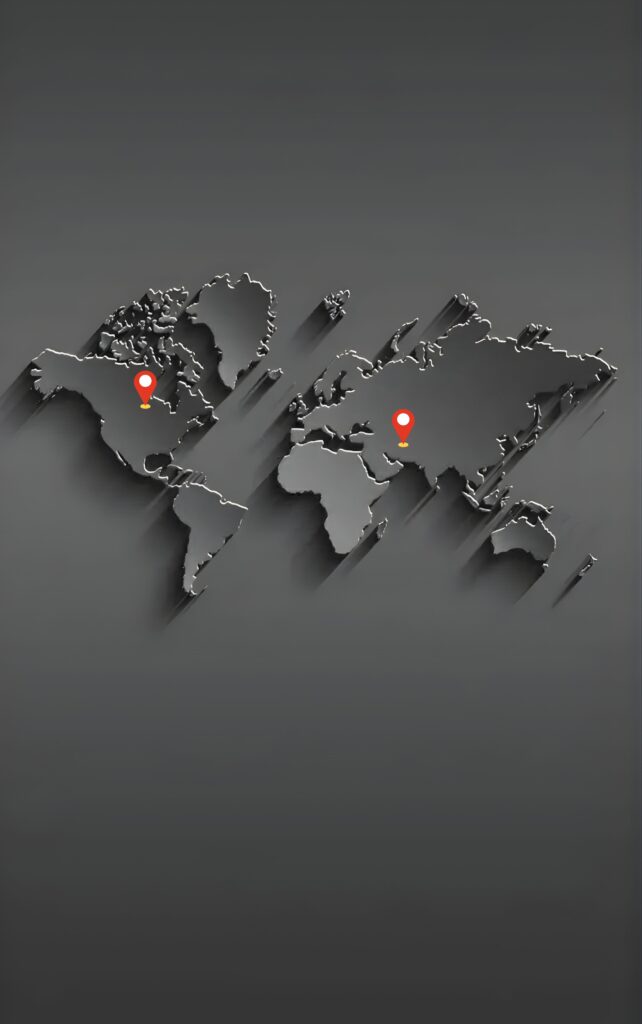
To test how effective this system can be, we place it in two almost opposite contexts: Iran, a country currently experiencing a deep collapse of its political structure and active warfare, having fallen far behind the train of the developing world; and Canada, a third‑wave, front‑running society often taken as a benchmark of developed democracies. The question is: in each of these two very distant points on the civilizational spectrum, what positive changes can a Civilizational Republic realistically produce, and which hidden weaknesses and fractures in the existing order does it reveal?
Section Summary
Test in Iran: Examine how the Civilizational Republic architecture performs against Iran’s simultaneous crises—depleted resources, power concentration, deep mistrust, and an exhausted ballot‑box democracy.
Two‑layer structure and anti‑secession locks: Show how the national–provincial two‑level model both strengthens local agency and dignity, and contains historic fears of fragmentation through legal and institutional “locks.”
Transparent law and justice: Explain how a constitution rooted in the civilizational charter, together with an independent judiciary, can rebuild trust and block systemic abuse of power.
Next step: comparison with Canada: Prepare the reader for the question, “If we run the same model in a country like Canada, what strengths and tensions emerge?”—and why this comparison matters for the model’s civilizational credibility.
April 2026
«Civilizational Republic» 5
This section reveals the scientific foundations of the “Civilizational Republic”: it shows that this model is not just a political slogan, but is grounded in a combination of several research fields and the study of living and civilizational systems.
The Civilizational Republic, as a governance architecture, was not built from scratch on political intuition alone; behind it lies a synthesis of studies of multi‑million‑year natural civilizations, the literature on governance and the rule of law, analyses of complex systems and organizational entropy, and research on democratic deficits and oligarchy in ballot‑box democracies. Concepts such as civilizational yield, the 100‑year program, civilizational KPIs, the two‑layer architecture, and institutional anti‑concentration locks are attempts to translate the language of these sciences into an executable design — a model that does not present itself as a “final version”, but as an open framework for criticism, empirical testing, and collective evolution.

Section Summary
Inspired by living systems and natural civilizations: viewing human civilization as a multilayer system that, like ecosystems, must deal with survival, entropy, and the yield of energy/awareness.
Interdisciplinary synthesis: drawing on ideas from political science and governance, institutional economics, complex systems theory, psychology, and political sociology to frame the problems of power concentration and aimless rule.
Metrics and testable tools: using the idea of civilizational KPIs, a revisable 100‑year program, and public reporting to move the model beyond rhetoric into the realm of testability and accountability.
An open model, not a final blueprint: emphasizing that the Civilizational Republic is a proposed architecture that must be refined in dialogue with real‑world data, academic critique, and the experience of different countries — not a closed, sacred template.