Consciousness as a Resonance Frequency Coding Principle

March 25 / 2026 / 4:00 PM

Consciousness as a Resonance Frequency Coding Principle (RFCP)
Wave Resonance and the Emergence of Coherence from Planck Scale to the Cosmos
Part 1:

Abstract
Consciousness, despite its foundational role, remains one of the most enigmatic phenomena in the universe. Previous attempts to reduce it to purely physical processes or to explain it within classical philosophical frameworks have largely failed, underscoring the need for interdisciplinary and empirically testable models.
This article presents an in‑depth analysis of the Resonance Frequency Coding Principle (RFCP) as a unifying theoretical framework for understanding consciousness. RFCP integrates recent advances in neuroscience (GNW, IIT), biophysics (CEMI), quantum physics and cosmology, and—building on a Geometric Conservation Law—proposes that consciousness arises from multi‑scale resonance patterns, ranging from Planck‑scale and microtubular oscillations up to interactions with cosmic fields.
The framework combines empirical testability (EEG, MEG–based measures), quantitative indices of consciousness, and a new pathway toward addressing both the hard problem of consciousness and the explanatory gap.
Keywords: consciousness theory · RFCP · wave‑like consciousness · qualia · hard problem · biophysics · geometric conservation law · neurogeometry · EEG · MEG

1. Introduction: The Persistent Problem of Consciousness

Consciousness is the most immediate and yet the most mysterious aspect of existence. Despite centuries of philosophical inquiry and decades of rigorous neuroscientific research, the fundamental question of how subjective experience arises from physical matter remains unresolved.
The core challenge is the lack of a mathematically precise and empirically testable framework: a truly scientific theory of consciousness must specify an exact mapping between physical states (p‑description) and conscious states (c‑description). This article introduces RFCP as a response to that need—a synthesis that unifies key scientific and philosophical insights within a single operational paradigm.

March 25 / 2026 / 4:00 PM

Consciousness as a Resonance Frequency Coding Principle (RFCP)
Wave Resonance and the Emergence of Coherence from Planck Scale to the Cosmos
Part 2:

3. The Multi-Scale Architecture of Consciousness in RFCP
In the previous sections, RFCP was introduced as a resonance-based framework for understanding consciousness, one that draws both on neural theories (such as GNW and IIT 4.0) and on quantum and electromagnetic field models. The central question now is how this framework is organized at the structural level: in which physical, biological, mental, and cosmic layers does consciousness actually arise, and in what form?
Drawing on the Sonic theory, RFCP proposes that consciousness is realized not at a single level, but within a multi-scale architecture. This architecture begins with quantum oscillations in neuronal microtubules and extends through network-level brain resonances, a holographic memory space, planetary and cosmic fields, and ultimately to a level of cosmic consciousness. It is described in terms of seven resonant levels, A through G, each representing a distinct scale of organization.
In what follows, these seven levels are examined step by step: from “Level A,” which explores quantum resonances in microtubular structures, to “Level G,” which links individual consciousness to a field of cosmic awareness. This trajectory builds a bridge from the Planck scale to the cosmos and shows how resonance patterns at each scale are subsumed into higher levels, giving rise to unified conscious experience.

March 25 / 2026 / 4:00 PM

Consciousness as a Resonance Frequency Coding Principle (RFCP)
Wave Resonance and the Emergence of Coherence from Planck Scale to the Cosmos
Part 3:

4. Time, Temporality, and Processing Capacity in the Sonic–RFCP Framework
In most neuroscientific models, time is treated as an external, continuous parameter against which brain activity is measured: spikes, local field potentials, and BOLD signals unfold on a linear timeline that is simply “there” in the background. Yet subjective time does not behave like a simple clock: the experienced now spans 2–3 seconds, time can dilate under stress, and memories and anticipations can be vividly present in a single moment. The Sonic–RFCP framework argues that these phenomena arise from a multi‑scale resonance architecture in which discrete quantum moments, supra‑temporal integration, and nested oscillatory windows jointly shape conscious temporality.
At the same time, if consciousness is truly grounded in multi‑scale resonance, the brain must possess sufficient raw processing capacity to sustain such an architecture. A simple order‑of‑magnitude estimate shows that the human brain, in principle, has an enormous information throughput—spanning roughly five orders of magnitude between minimal and maximal plausible operating regimes. This wide range provides the “dynamic room” within which different temporal states of consciousness—ordinary waking, meditative absorption, psychedelic expansion—can be realized as distinct resonance profiles rather than hard structural limits.

March 25 / 2026 / 4:00 PM

Consciousness as a Resonance Frequency Coding Principle (RFCP)

Wave Resonance and the Emergence of Coherence from Planck Scale to the Cosmos
Part 4:

5. Physical, Mathematical, and Conceptual Foundations of the Sonic-RFCP Framework
In the Sonic-RFCP framework, consciousness emerges from multi-scale resonance patterns spanning from Planck-scale oscillations to interactions with cosmic fields. To move beyond qualitative description, this section establishes three pillars—physical, mathematical, and conceptual—that pave the way for scientific testability.
5.1 Physical Foundations of the Consciousness Field: Three Converging Perspectives
The consciousness field in this theory is defined as a fundamental, non-material, and nonlocal informational substrate. The convergence of three physical perspectives strengthens this claim.
5.1.2 Biophysical-Quantum Perspective (Torus Geometry)
The brain is a fractal field-receiving resonator composed of nested toroidal structures (Nested Toroids). Toroidal coupling links resonant wave chains across scales—from microtubules and neuronal networks to holographic workspaces—enabling ultra-fast integration of electromagnetic, acoustic, and quantum signals.
In this model, structured water within and around neurons serves as an extended quantum antenna through phenomena like proton tunneling and ordered hydrogen bonding networks. It extends information transfer speed and range beyond classical limits while facilitating whole-brain synchrony. This geometry establishes the superiority of a scale-invariant, field-oriented workspace over the physical brain; a space that receives and updates both internal neural data and cosmic information.
This toroidal-holographic architecture and the “brain-as-event-horizon” role in connecting to the 4D knowledge field are schematically illustrated in Figures 6 and 8.

March 26 / 2026 / 4:00 PM

Consciousness as a Resonance Frequency Coding Principle (RFCP)

Wave Resonance and the Emergence of Coherence from Planck Scale to the Cosmos
Part 5:

Section 6: Quantum Time and Temporal Quanta
Introduction: From Physical Foundations to the Temporal Structure of Consciousness
In Section 5, three physical perspectives on the field of consciousness were explored: the twisted geometry of spacetime, the toroidal and holographic architecture of the brain, and the fundamentally informational nature of reality. All of these views implicitly assume that physical events occur within a “moment”. But what is a moment? How should it be defined? If a physical change (such as breaking a chemical bond or a change in an electron’s state) occurs, can this change be completed over different temporal intervals?
Without a precise understanding of the nature of time, it is impossible to see in what kind of temporal substrate the complex architectures of the previous sections actually operate. This section addresses foundational questions: What is time? Is time a continuous line, or does it have a granular structure? And more importantly: how does the fundamental temporal structure influence physical events and, consequently, consciousness?
6.1 DadarTime: The Fundamental Unit of Time and Its Quantum Nature
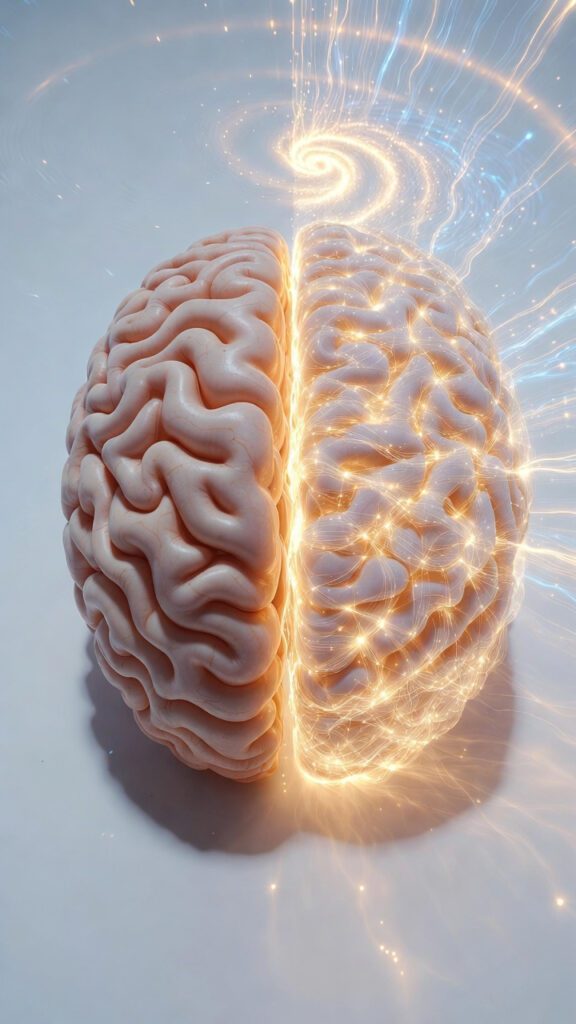
Time is experienced as an “extended present”: a continuous now within which the present moment resides. In this framework, this extended present is built from the persistence of temporal quanta that, together, constitute reality—quanta within whose interval no physical event is completed. Intuitively, one can compare it to the duration required for the fastest entity (light) to traverse the shortest fundamental distance (the Planck length). This temporal quantum is called DadarTime.
In the RFCP quantum field framework, time itself is treated as a fundamental field, and DadarTime is the “particle” or quantum of this field, just as the photon is the quantum of the electromagnetic field. In terms of scale, DadarTime lies in the order of Planck time (about  seconds). However, its role goes beyond that of a mere natural unit: DadarTime is defined as the smallest real and indivisible temporal slice within which, even at the quantum level, no effective physical event can be fully completed.
If, within what we call the smallest temporal slice, we can still identify an internal sequence of events, that slice is not truly fundamental and must be further subdivided. DadarTime is defined precisely so that this need for further subdivision disappears: every physical event is a transition between two adjacent DadarTimes (state A in the previous DadarTime, state B in the next), rather than a process that unfolds within a single DadarTime. In this picture, the time field is like a continuous line, but physical structure is defined only on the “rest points” of that line—namely, the DadarTimes themselves.

March 26 / 2026 / 4:00 PM

Consciousness as a Resonance Frequency Coding Principle (RFCP)
Wave Resonance and the Emergence of Coherence from Planck Scale to the Cosmos
Part 6:

7. Self, Free Will, and Ethics in a Dual-OS Framework
Human Duality:
The human being remains one of the most enigmatic entities on Earth. While science has identified and classified millions of species, it has struggled to decode the inner architecture of human nature. This ambiguity stems from a fundamental cognitive error: treating the human, like other organisms, as a single-dimensional entity. Reducing the multiple dimensions of human existence to a purely biological level is the root of our confusion. The second dimension of the human is not located in the physical body, but in an operating system that functions beyond the neural hardware. Within the RFCP model, the human is described by two intertwined operating systems:
Biological OS: Implemented in the neural hardware of the brain.
Consciousness OS: Emerging from resonance with the multilayered Field of Awareness.

March 26 / 2026 / 4:00 PM

Consciousness as a Resonance Frequency Coding Principle (RFCP)
Wave Resonance and the Emergence of Coherence from Planck Scale to the Cosmos
Part 7:

Section 8: Fundamental Implications; From Reality Engineering to Civilizational Transformation
In this section, we demonstrate what implications arise for physics, psychology, ethics, and civilization if we consider consciousness as an informational field and time as a discrete sequence. The Sonic-RFCP framework, through these redefinitions, shifts the boundaries of classical science and social structures. These implications are elaborated in two categories: “scientific-theoretical” and “applied-social.”
8.1.2 Causality and Engineering Historical Paths in the Substrate of the “Eternal Now”
In the Sonic-RFCP framework, causality is no longer a deterministic chain from past to future; for in nature, neither past nor future exists—only the “continuous present” is real.

March 26 / 2026 / 4:00 PM

Consciousness as a Resonance Frequency Coding Principle (RFCP)
Wave Resonance and the Emergence of Coherence from Planck Scale to the Cosmos
Part 8:

Section 9: Responding to Fundamental Challenges; From the Hard Problem to the Philosophical Zombie
The credibility of a comprehensive theory of consciousness lies in its ability to resolve the “Explanatory Gap.” The Sonic-RFCP framework, by shifting the paradigm from “reductive materialism” to the “resonant reception model,” provides mechanical and falsifiable answers to classical puzzles. In this section, five core challenges are addressed one by one.
9.1 The Alchemy of Qualia and Solving the Hard Problem
The Hard Problem asks: why must physical processes be accompanied by “qualitative experience”?
Qualia as a User Interface: In the Sonic-RFCP model, qualia are not a byproduct but rather the brain’s “electrochemical coding language” for translating field data. The brain processes raw frequency information and renders it—converts it into lived experience—displaying it as “color” or “pain” so that it becomes meaningful and serves as a survival tool for the living organism. In other words, qualia are the “sensory output” of the informational field made usable for a biological receiver.

March 26 / 2026 / 4:00 PM

Consciousness as a Resonance Frequency Coding Principle (RFCP)
Wave Resonance and the Emergence of Coherence from Planck Scale to the Cosmos
Part 9:

10. Experimental Roadmap and Falsifiability Criteria
The credibility of any physical theory hinges on its testable experimental predictions. To move from the theoretical Sonic‑RFCP model toward empirical confirmation or refutation, three laboratory domains are proposed, each with a clearly defined falsification condition.
1. The Coherence Threshold Experiment (The 0.74 mV/mm Test)
According to the model’s calculations, inter‑regional synchronization in the brain (binding) requires an electromagnetic field with a minimum intensity of approximately 0.74 mV/mm; this value is put forward as a quantitative prediction of RFCP and can be tested against existing tACS / EM‑field protocols that have shown even weak fields can phase‑lock neuronal firing.
It is proposed that, using external oscillatory stimulation under controlled conditions, this threshold be examined in neural models and in vivo systems. If robust unity of experience and stable synchronization were to occur at field strengths far below this boundary, this prediction of RFCP would be falsified.

Shopping Cart
Scroll to Top